
Note: This article is based on my personal experience and research. I am not a doctor or a dietitian, and this content is for informational purposes only. Always consult with your healthcare provider before making any changes to your diet or lifestyle.
Bananas are some of the most frowned-upon fruits when it comes to fatty liver disease. The main reason why most people tell you to stay away from bananas is the high amount of carbs (aka sugars) they contain.
And while this is indeed correct – bananas have a lot of sugar – they are not as bad as some try to make them seem. Today, we’ll look at the whys and answer the burning question: Are bananas good or bad for those with fatty liver disease?
You can eat bananas if you have fatty liver disease, but not more than one per day. Despite their high carb content, bananas are good for the liver thanks to their nutrient-dense profile, offering plenty of Potassium, Magnesium, and Vitamins C & B6.
There is a catch, though
A banana sitting on the kitchen counter (or anywhere, for that matter), undergoes a chemical transformation each day.
When the peel is green(er), the fruit inside acts like medicine for a struggling metabolic system. By the time that same peel develops brown spots a week later, its internal structure resembles dessert more than anything else.
Still, fruits are extremely important for our general health and, if used smartly, they can help you in your quest to reverse fatty liver disease aka MASLD (formerly known as NAFLD). You can read more about fatty liver and eating fruits here.
As you probably know if you are a regular on this website, I disagree with the voices demanding you completely cut off fruits from your diet.
I disagree with the voices demanding you completely cut off fruits from your diet.
Even the sweetest fruits – like a ripe banana – are still better than most other store-bought (or even homemade) desserts.
Humans have consumed fruits for tens of thousands of years, and our bodies have adapted to processing natural fructose far better than synthetic sugar or syrups.
Also, a whole fruit is a lot more than just carbs: you get minerals, vitamins, antioxidants, and dietary fiber. This dietary fiber forces the sugar to release at a slower rate into your bloodstream, making the overall impact on your liver much softer, while all the other nutrients feed your body what it needs to thrive.
But… back to bananas!
The Ripeness of the Banana and MASLD
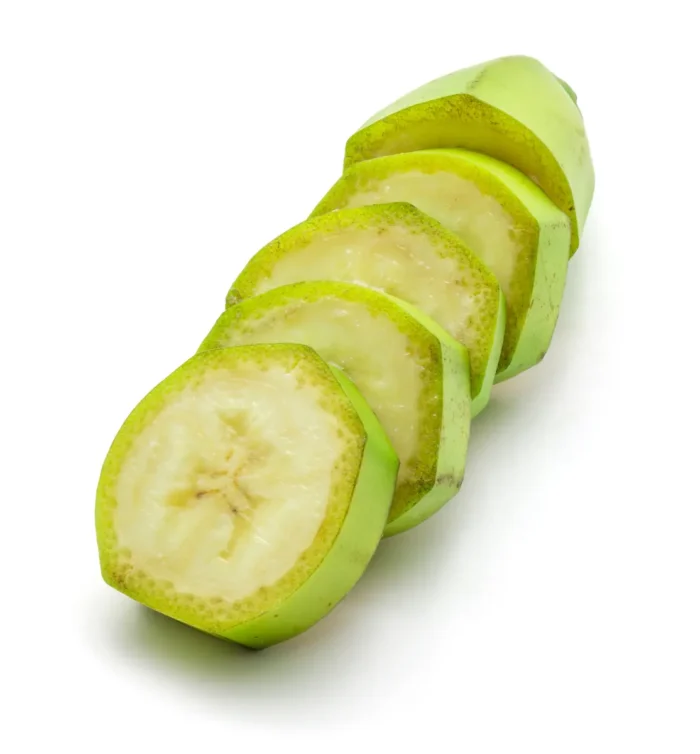
When it comes to bananas, the ripeness of the fruit dictates exactly how your body processes it.
A green, unripened banana is packed with resistant starch. This specific type of carbohydrate resists digestion in the small intestine and ferments in the large intestine.
It acts as a prebiotic, feeding healthy gut bacteria and improving insulin sensitivity. There is a study on Science Direct to support this.
As the fruit turns yellow and eventually gets those brown spots that tell us its yummy, those resistant starches convert into free sugars.
This conversion raises the glycemic index (GI) of the banana, meaning a very ripe banana will spike your blood sugar much faster than a slightly green one, making it less of an ideal choice.
But even a ripe banana can be consumed in moderation, as long as you keep an eye on your daily caloric intake, carbs consumed and eat a healthy diet in general.
Nutritional information of Bananas
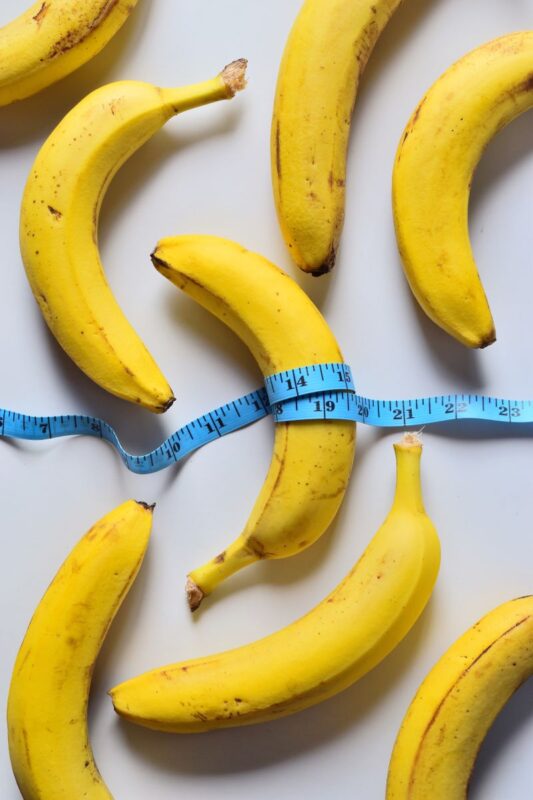
Everybody probably knows already, bananas do have a lot of sugar. This is undeniable and it’s probably what makes them so tasty and enjoyable in the first place, right?
But, as I said, that’s not all. Let us look at the exact nutritional profile of a medium-sized banana below (via USDA):
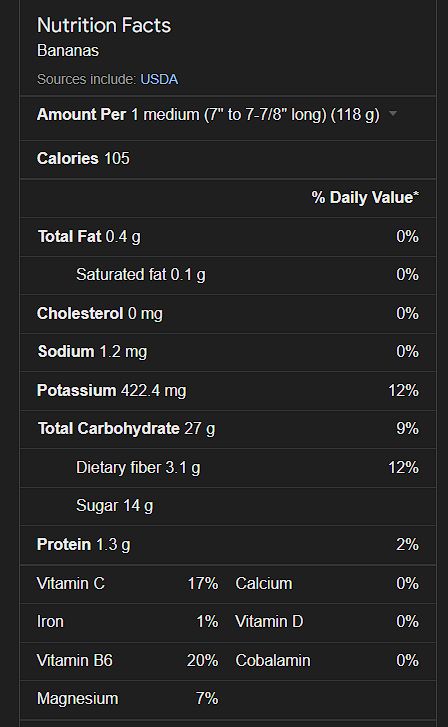
So looking at the numbers above, we can see that they are not as scary as some say.
Yes, there are plenty of carbs there, but less than 14% is actual sugar (most likely under the form of fructose, which is the natural sugar in fruits) and quite a bit of dietary fiber.
These dietary fibers lower your cholesterol levels and some consider them helpful in controlling blood sugar levels.
For example, white bread has LESS fiber than bananas do (per 100 grams). This is why I recommend going for keto bread alternatives if you have a fatty liver disease.
Also, we can see that one banana also has around 450 mg of Potassium, an extremely important mineral for our bodies, plus high amounts of vitamin C and B6, as well as other minerals.
One banana fills me up better than other fruits – and keeps me full for longer periods. For example, one medium apple can have more sugar than a banana does, but it doesn’t fill you up just as much!
Oranges have fewer carbs, that is true – but they also don’t manage to make you feel full for just as long. And this should be considered as well, in my opinion: how long you feel full afterward.
Finally, you can use a whole banana as a sweetener in various foods (like banana bread or other healthy desserts for fatty liver). You no longer add sugar, as bananas are sweet enough and have a pleasant aroma.
How to Eat Bananas for Liver Health
After looking at the facts and data, we can definitely say that you can indeed eat bananas if you have a fatty liver.
But it matters HOW you eat them.
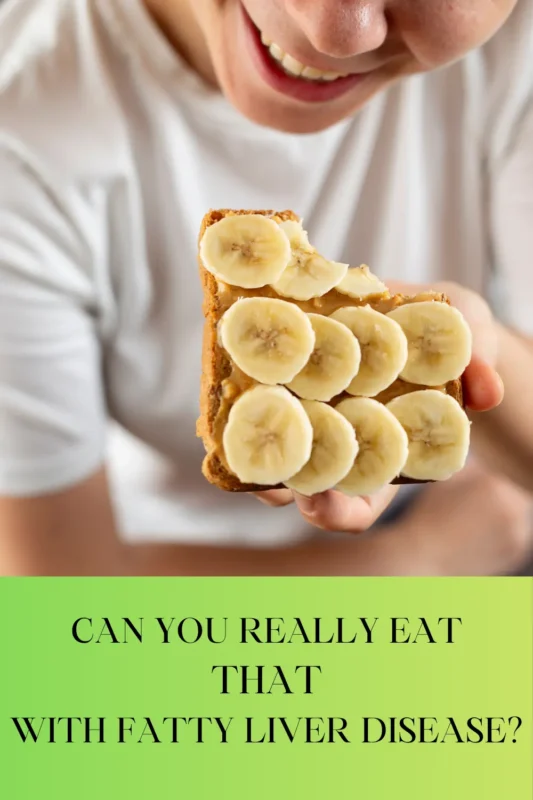
If you choose to eat a fully yellow banana, you can blunt the resulting insulin spike by pairing it with a healthy fat or a healthy protein. This ensures the sugar in the banana enters your bloodstream gradually, preventing your liver from being overwhelmed by a sudden influx of fructose.
While I wouldn’t go as far as saying that they are “good” for MASLD (NAFLD) and that you should eat them daily, I don’t believe that you should completely take them out of the menu as part of the required lifestyle changes to reverse your condition.
Solid pairings include:
- Half a teaspoon of raw almond or peanut butter
- A few walnuts or pecans
It’s preferable to eat one banana or any other fruit instead of other processed foods, especially sweet snacks, chocolate bars, and such.
I believe that you can safely include bananas in your diet for NAFLD (you can find out more about my recommended diet here). I have reversed my fatty liver without eliminating them from my diet.
During the first 3 months after being diagnosed, I ate very few bananas because I read in many places that they should be avoided. Probably one per week, so you can do the same and still be on the safe side.
However, after three months and more research, I started eating more bananas. Now, I am eating one banana as a snack between the main meals regularly. I usually eat one banana per day, but sometimes two bananas without any problems.
I still managed to reverse my fatty liver, which is an additional proof that eating bananas is definitely not the end of the world and not something that would prevent you from reversing this condition.
Just make sure that overall, at the end of the day, you don’t go above your daily threshold of carbs (read here how much sugar to eat per day).
So the key here is, just like with most things related to curing a fatty liver: moderation.
And always choose a fruit over cakes, cookies or candies as they are the healthier option and they still satisfy our sweet tooth, better than we might think they do.
Are there any other types of foods that you are curious about? Let me know by posting your comments below.
Enjoying this content? Support the site on Patreon to help fuel future guides and resources! Thank you!

I was diagnosed with fatty liver in 2014 and successfully reversed it by mid-2015 using a natural diet and lifestyle changes. Since then, I’ve dedicated over a decade to researching this condition and helping others navigate their own recovery. I am the author of ‘From Fatty Liver to Healthy Liver’ and the founder of this community. My goal is to translate complex medical studies into practical, real-world advice that actually works, combined with my personal experience on the matter.
What do you think about maple syrup as a sweetener for coffee?
It has almost as many carbs as sugar, so you should still use it with caution and moderation if you can’t do without it.
It’s very nice a person like you and heartily sharing to others that really in need for your great success of reversing fatty liver..
I have blood works done and my Doctor’s said, I have Liver enzymes elevated….So, I started searching online information on how to cure or lower liver enzymes… I got some good information about some fruits and nuts like; Walnuts, Almonds. Grapefruits and Coffe without Milk and sugar are good to detox liver.. I hope, you can give me more information about healthy diet and the right food to eat to back to normal healthy body..
My Name is Arman from Las Vegas
Thank you so much and God Bless you
Maple syrup usually has high fructose corn syrup, so I wouldn’t touch it. It’s definitely the wrong kind of sugar to stick in your body.
I’d like to know your opinion on toritilla chips. I love Doritos Dippas. I usually eat them without any salsa, but occasionally I eat them with a natural, low-salt guacamole. Thanks