

Note: This article is based on my personal experience and research. I am not a doctor or a dietitian, and this content is for informational purposes only. Always consult with your healthcare provider before making any changes to your diet or lifestyle.
While fatty liver disease’s original name was changed to MASLD (Metabolic Associated Steatotic Liver Disease) in 2023, the confusion about what foods to eat remained the same.
We know that making the required lifestyle changes, exercising, and following a proper, liver-friendly diet helps the reversal… but in many cases, most people don’t really know what “liver-friendly diet” actually means and what foods can be consumed or avoided.
This is where I step in with today’s article about watermelons and MASLD (NAFLD). Fruits are always a sensitive topic, and you’ve probably heard both those who say that you should eat plenty and those who say you should avoid them completely.
Today, I will tell you what I did as a former patient who healed his fatty liver, but also look at the science and data, so you can get the full picture and make an educated decision.
Is Watermelon Safe for Fatty Liver/MASLD?

Yes, you can still eat watermelon if you have metabolic liver issues. A single portion, roughly the equivalent of one cup per day, can fit into a recovery diet as long as the rest of the food you eat is nutritious and healthy too.
Watermelons contain many nutrients that can help support healthy liver function, including vitamins, minerals and amino acids.
However, they also have a high glycemic index because of their natural sugar content (fructose). Since sugars are something we should keep away from, watermelons should be consumed in moderation.
Consider the fact that watermelon is 92 percent water, so the actual amount of carbohydrate per standard serving is relatively low. For my recommended amount – a cup of watermelon – the glycemic load is, therefore, low.
In other words, as long as you keep your portions under control, you get the sweetness and the antioxidants without the massive insulin spike.
My Personal Experience
To offer my personal perspective too, I did consume watermelon after being diagnosed with a fatty liver disease (and, as you probably know, I reversed it too).
I strongly believe that fruits play an important role in our diet, so consuming them in moderate amounts will definitely benefit our bodies and liver.
Consuming sweet fruits can help those with a sweet tooth (as a cup of watermelon is better than a regular peanut and chocolate bar), it helps beat dieting fatigue and comes with benefits refined sugars don’t offer.
With a few exceptions, you do not have to banish the foods you enjoy to see medical improvements.
Top Ways Watermelon Supports Liver Function

Here are some of the ways watermelon is beneficial for one’s health:
- It might help reduce inflammation: Watermelon is rich in anti-inflammatory compounds, such as lycopene (a powerful antioxidant also found in tomatoes that most other fruits lack completely) and vitamin C. These can help reduce inflammation in the liver, which can, in turn, prevent damage and scarring.
- Helps regulate blood pressure: High blood pressure is a common complication of fatty liver disease. Watermelon is rich in potassium, which can help regulate blood pressure and reduce the risk of heart disease.
- Helps with hydration: Staying hydrated is a basic requirement for filtering waste from the body. Because watermelon is mostly water, it acts as an excellent tool for maintaining fluid balance during the hot summer months.
- Can support weight loss and insulin sensitivity: Metabolic dysfunction is heavily tied to insulin resistance and obesity. While watermelon contains just a tiny amount of fiber, its extremely low caloric density makes it a satisfying snack that does not wreck your daily macronutrient goals.
Also read: Best Salad Dressing for Fatty Liver
The Nutritional Benefits of Watermelon
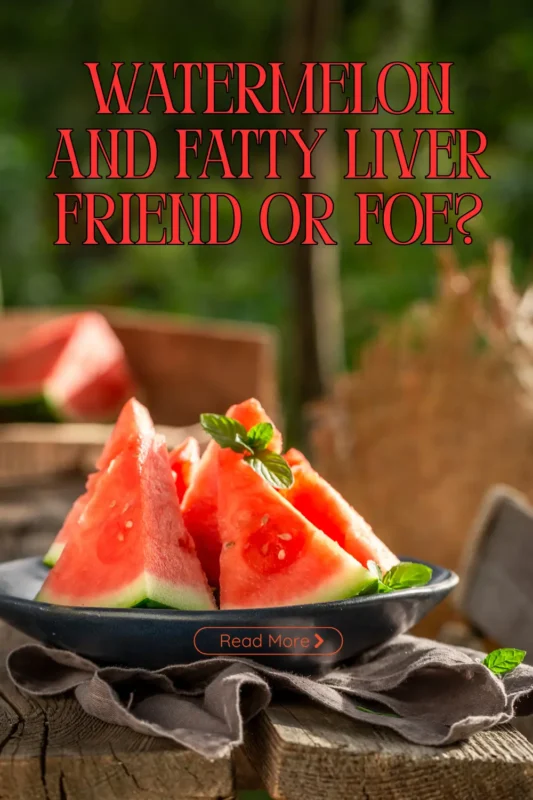
Going more in-depth, let’s talk about all the nutritional benefits of this delicious fruit. I’ve mentioned some above already, but for those who really want to know all the details, I have them.
Watermelon is a great source of vitamins A, B6, and C, as well as potassium and magnesium. It is also high in antioxidants, which can help protect your cells from damage caused by free radicals.
Watermelon also has Lycopene, which is one of the most powerful natural antioxidants – and most fruits and vegetables don’t have it.
Nutritional information for watermelon
Here is the nutritional info for watermelons per 100 grams.
| Nutrient | Amount |
|---|---|
| Calories | 30 kcal |
| Carbohydrates | 7.6 g |
| Fiber | 0.4 g |
| Protein | 0.6 g |
| Fat | 0.2 g |
| Vitamin C | 8.1 mg |
| Vitamin A | 28 mcg |
| Potassium | 112 mg |
| Magnesium | 10 mg |
| Lycopene | 4,532 mcg |
It’s worth noting that the nutritional value of watermelon can vary depending on the ripeness and variety of the fruit, but the values above should be pretty clear indicators of what you should expect.
If you want to learn more about other fruits and how suitable they are for dealing with a fatty liver disease, check out my previous articles:
Conclusion
In conclusion, watermelon is not only delicious but also nutritious and can be consumed in moderation by those who have a fatty liver. I did so, and I still reversed my condition, so it’s definitely not one of the foods you should blacklist.
However, it’s important to note that watermelon cannot cure fatty liver disease on its own. I try to get at least 8,000 steps every day to maintain my activity levels, so pair your smart dietary choices with consistent physical movement and adequate rest to keep your liver functioning at its best.
Enjoying this content? Support the site on Patreon to help fuel future guides and resources! Thank you!

I was diagnosed with fatty liver in 2014 and successfully reversed it by mid-2015 using a natural diet and lifestyle changes. Since then, I’ve dedicated over a decade to researching this condition and helping others navigate their own recovery. I am the author of ‘From Fatty Liver to Healthy Liver’ and the founder of this community. My goal is to translate complex medical studies into practical, real-world advice that actually works, combined with my personal experience on the matter.