
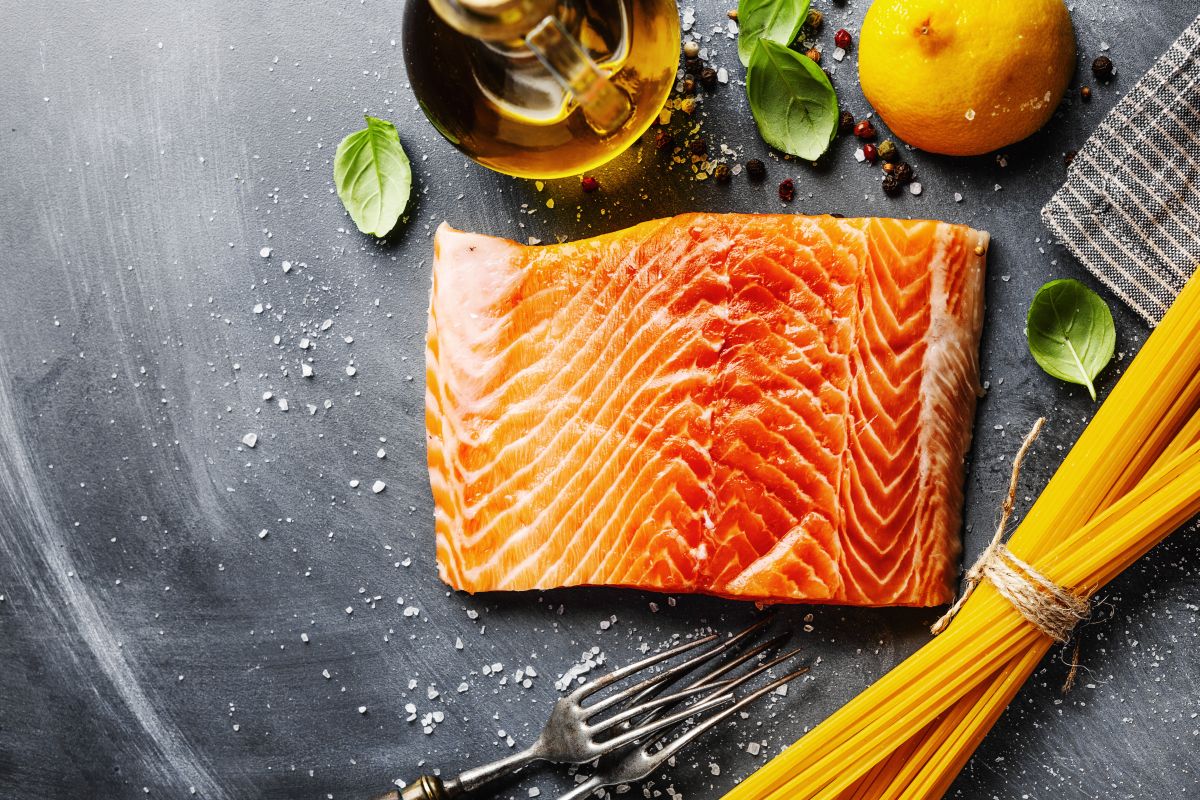
Here’s a fun fact: not all fats are bad when dealing with fatty liver disease. And it’s exactly why salmon, a fish loaded with fat, might not just be okay but actually great for your recovery.
As someone who completely reversed my fatty liver disease, I know firsthand how confusing dietary advice can be, but today I’m going to help you understand one of the many superfood-like foods, salmon.
I’ll explain why salmon deserves a place on your plate and how its healthy fats actively help repair your liver. Let’s jump right in!
Is Salmon Safe for Fatty Liver?
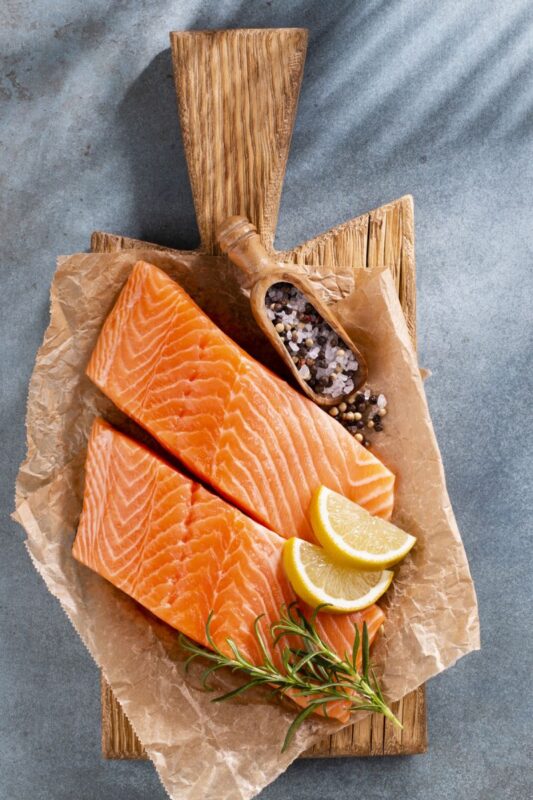
Yes! Salmon is safe – and even beneficial – for fatty liver disease (now called MASLD). The key lies in the type of fat it contains. Unlike the saturated fats in red meat, the fats in salmon are mostly omega-3 fatty acids, also called “good fats.”
You can read more about healthy unsaturated fats at Harvard’s School of Public Health, if you want to get more in-depth with the concept.
The bottom line is that you shouldn’t exclude salmon (especially wild salmon) from your diet just because it is a fatty fish. It has many benefits for your body, including the liver and MASLD/NAFLD.
Why Salmon Is Good for Your Liver
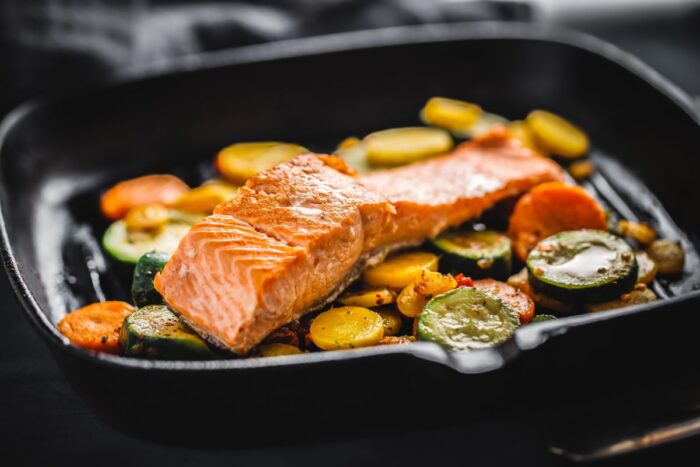
Unlike whitefish, which store most of their fat in their livers, salmon stores its healthy oils throughout its flesh.
While a salmon fillet is rich in fat, the exact percentage varies by species. King salmon might sit around 10 to 15 percent fat by weight, whereas sockeye is significantly leaner.
The star of the show here is the high concentration of omega-3s. Here are the specific ways these healthy fats help our bodies and liver recover:
- Lower triglycerides: Less fat in your blood means less fat piling up in your liver.
- Reduce inflammation: This prevents NAFLD/MASLD from getting worse.
- Boost good cholesterol (HDL): HDL sweeps bad cholesterol out of your system, reducing liver stress.
- Improve insulin sensitivity: Insulin resistance is a major factor in fatty liver, and omega-3s help combat it.
How nice is that? Using fat to beat fat! This is why these unsaturated fats are usually called “healthy fats” and the saturated fats are the “unhealthy ones”.
I safely consumed wild salmon once a week while working to reverse my condition. I even wrote a book about my entire journey called From Fatty Liver to Healthy Liver.
Of course, I did not reverse fatty liver disease just because I ate salmon, but because it was part of my recommended diet, backed up by the supplements I also took, including adding apple cider vinegar into my routine, another type of food known for helping us.
Wild vs. Farmed Salmon: It’s Not the Same
Unfortunately, not all salmon are created equal. Wild-caught salmon (like Pacific salmon) is better for your liver because it has more omega-3s and fewer contaminants than farmed salmon.
If you can afford it, it’s best to opt for wild salmon because the farmed varietis:
- Contain more unhealthy fats due to their diet.
- Are fed antibiotics to prevent disease, but these are transferred to you.
- Persistent organic pollutants (POPs) have been found in farmed salmon meat, and these are related to various other health problems and risks.
- Farmed salmon are often fed red dye to get that red color that wild salmon naturally have from eating shrimp. You can read more about wild vs farmed salmon here.
However, we need to be realistic about grocery budgets. Farmed salmon is still widely recommended by hepatologists over eating red meat, so it remains an acceptable and budget-friendly option if wild salmon is out of reach.
What about canned salmon? That’s a solid choice too, as long as it’s wild salmon. It has the same omega-3 benefits as fresh salmon, and it’s budget-friendly. Just check the label to ensure it’s BPA-free.
I recommend these options (affiliate links below):
Also read: Can you eat pork with fatty liver? And learn about sushi too.
How to Add Salmon to Your MASLD Diet
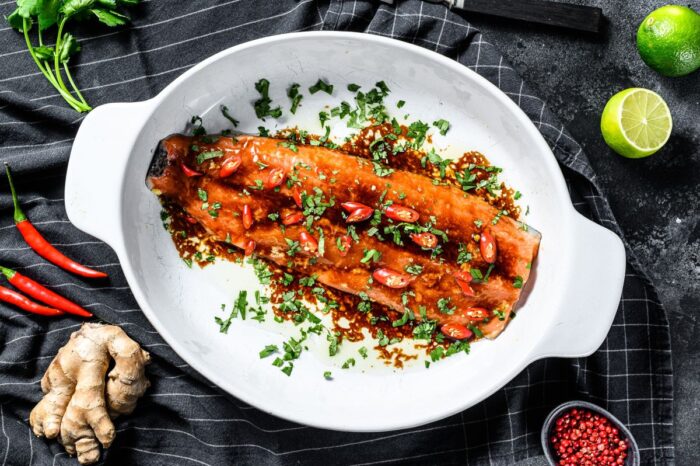
You don’t need to eat salmon every day. A serving (about 3-4 ounces) a few times a week is plenty (remember – I only ate it once per week, for example).
Just make sure you’re cooking it right. Skip the deep fryer and go for baking, grilling, or steaming.
In other words, avoid adding extra fats, sugars, or processed sauces with chemicals/preservatives when preparing it. Keep it as natural as possible after cooking and try to make it a habit to cook without oil.
Not into salmon? No problem. Here are some alternatives packed with omega-3s:
- Other fish: Mackerel, sardines, trout, and herring.
- Plant-based options: Flaxseeds, chia seeds, walnuts, and flaxseed oil.
So if you decide to go vegan or vegetarian in your quest to reverse fatty liver, you still have options. But otherwise, salmon is a great addition to your diet, like most other types of fish in general.
Wrapping Up
You can safely consume salmon in moderation if you are managing fatty liver disease. With its omega-3s, anti-inflammatory powers, and ability to lower triglycerides, this fish is a must-have for your MASLD diet.
Stick to wild salmon whenever you can, pair it with other healthy foods, stay active (start cycling, for example), and show your liver some love.
I need your help to keep this website alive! Consider becoming a Patron to help me achieve that. Thank you!

I was diagnosed with fatty liver in 2014 and successfully reversed it by mid-2015 using a natural diet and lifestyle changes. Since then, I’ve dedicated over a decade to researching this condition and helping others navigate their own recovery. I am the author of ‘From Fatty Liver to Healthy Liver’ and the founder of this community. My goal is to translate complex medical studies into practical, real-world advice that actually works, combined with my personal experience on the matter.