
Note: This article is based on my personal experience and research. I am not a doctor or a dietitian, and this content is for informational purposes only. Always consult with your healthcare provider before making any changes to your diet or lifestyle.
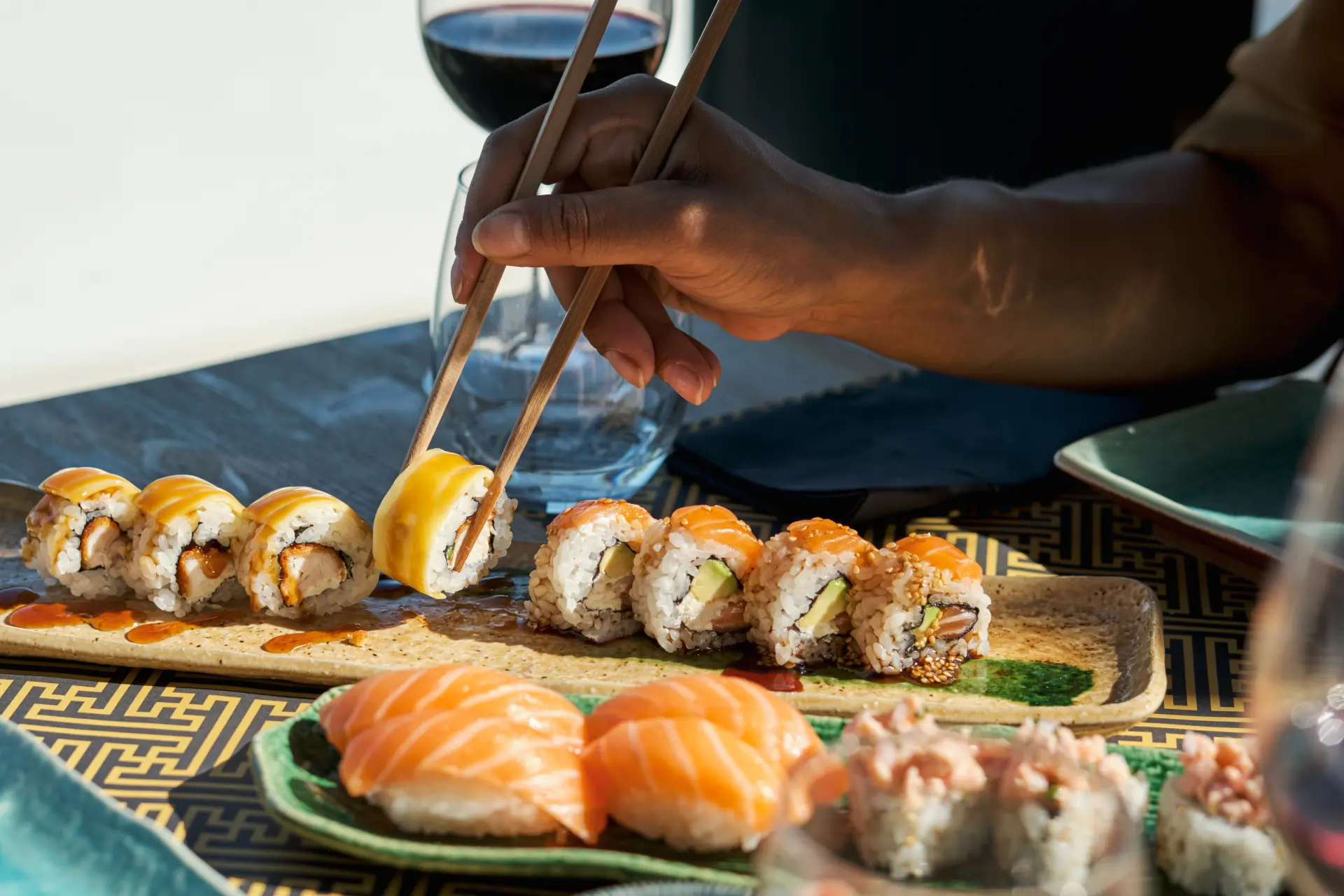
Sushi feels like a great food for NAFLD – light, fresh, seemingly healthy. But is it really so? I asked myself this very question when I was first diagnosed, especially since sushi was (and still is!) one of my favorite foods. Today, I have the answer in case you’re wondering as well.
As is the case with most things related to fatty liver disease, the answer isn’t as straightforward as you’d want it to be. Sushi offers some fantastic health benefits thanks to the fish and vegetables it contains, but certain ingredients – mainly white rice – complicate things.
This is why you might have to stop eating the popular Japanese food if you have NAFLD/MASLD. I talked more in-depth about eating rice with a fatty liver – so you can find out more after you’re done reading this article.
Carbs are the biggest problem with sushi
Traditional sushi rice is highly processed white rice, which leads to quick spikes in blood sugar levels. This contributes to liver fat accumulation and insulin resistance, both of which are troublemakers for fatty livers.
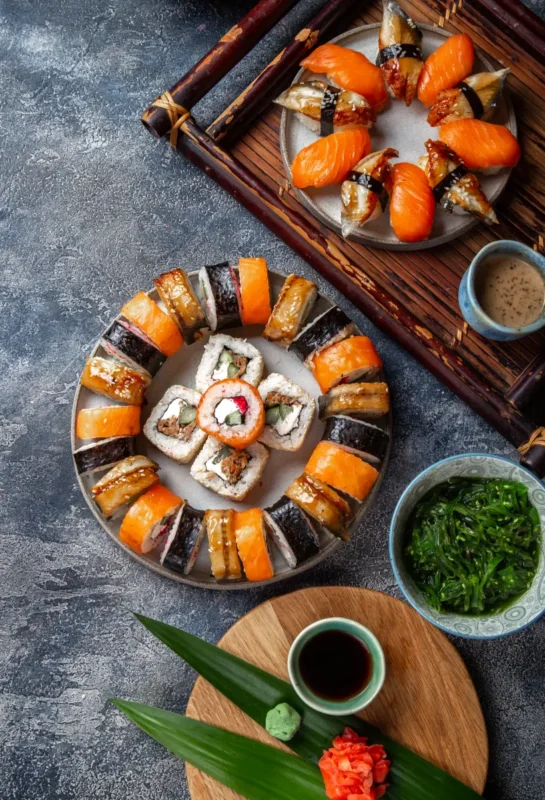
Additionally, some sushi rolls contain unhealthy fats or added sugars, like cream cheese, sugary sauces, crispy tempura bits, or mayonnaise-based fillings. These can exacerbate liver issues even further.
If you have NAFLD, avoiding foods high in refined carbohydrates is essential, as is the case with fatty foods or highly processed ones. You can read more about foods to avoid if you have a fatty liver.
However, there might be some potential workarounds (usually home-made) that would allow you to eat sushi if you really, really want to. In moderation, so don’t get your hopes up too much! Read on to learn more about your options!
Brown Rice Sushi & Alternative Options
The easiest way to make sushi healthier is to swap traditional white sushi rice for brown rice (or whole-grain alternatives), which will improve its health profile. Here’s a quick comparison between the two:
| Nutrient (per 100g cooked) | White Rice | Brown Rice |
|---|---|---|
| Calories | 130 kcal | 123 kcal |
| Carbohydrates | 28.7 g | 25.6 g |
| Fiber | 0.4 g | 1.8 g |
| Glycemic Index (GI) | High (72-80) | Medium (50-55) |
| Vitamins & Minerals | Minimal | Rich (B vitamins, magnesium, selenium) |
As you can see, the differences are not huge, but that extra fiber matters when it comes to the GI of these two foods. Brown rice not only has fewer carbs, but it also doesn’t cause a sudden blood sugar spike, while at the same time helping you feel full for longer and offering some extra minerals and vitamins in the process.
So not all rice is bad, just as it is the case with eating chicken, or even bread with fatty liver.
I won’t lie – the texture is a bit different, a bit chewier, and the taste slightly nuttier, and it might take a bit of adjusting if you’re switching from traditional sushi.
But I’ve personally found it to be a great compromise: after a point, ANY sushi is better than NO sushi!
If brown rice isn’t your thing, there are still other tasty alternatives you can use:
- Quinoa Sushi: High in protein and fiber, quinoa provides a wholesome alternative with a similar texture to brown rice.
- Cauliflower Rice Sushi: Ultra-low in carbs, cauliflower rice is a trendy option that’s surprisingly delicious when combined with your favorite sushi ingredients.
This makes sushi even healthier
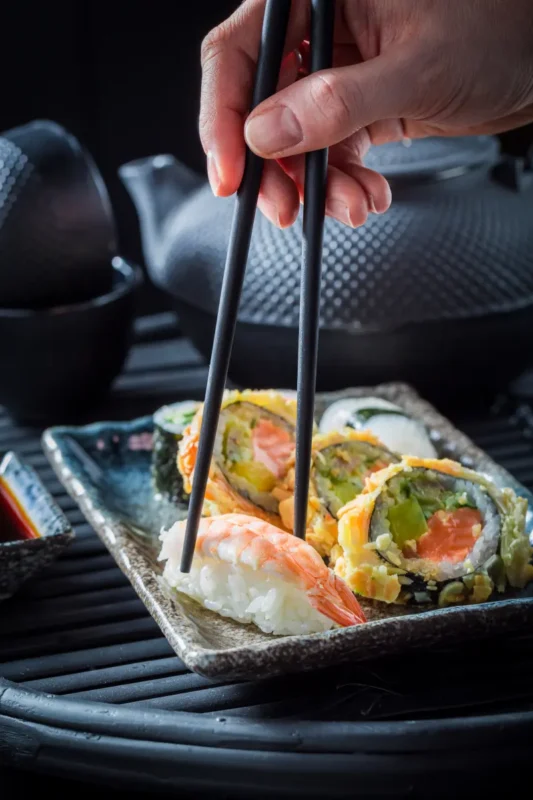
Apart from switching the white rice to brown rice or the two alternatives listed above, here are a few other things that will make it a healthier option if you have NAFLD:
– Don’t use crispy tempura bits.
– Use tamagoyaki made with egg whites instead of the whole egg (if you want it in your sushi).
– Use high quality fish, with Omega 3 fats (which are healthy) – like Wild salmon, albacore tuna, sardines, and mackerel.
– Eat more vegetables with sushi (a salad, for example, or use vegetables as a side-dish).
– Drink green tea with your meal. Green tea is also known for its beneficial effects on the liver. Also, you should stop drinking alcohol if you have a fatty liver, so that’s not an acceptable beverage when having sushi.
– Avoid adding high fat ingredients to your rolls (like Philadelphia cream cheese).
– Avoid adding ingredients that are high in sugar or have preservatives or are highly processed.
How Much Sushi Can You Actually Eat?
Even with these changes and using the recommended alternatives, moderation remains key. Without the changes – e.g. eating sushi with white rice, you should completely avoid it, or only have it as a treat.
If you make sushi with brown rice or other healthy alternatives, you can enjoy it sparingly, perhaps once every couple of weeks, and limit portions to a single roll (6-8 pieces).
As for me, I’ll admit – I occasionally indulge in sushi made with white rice, but only around once a month, and certainly far less than before my diagnosis. (Do keep in mind that I also reversed my condition and never had sushi before reversing it!).
Speaking of which – if you want to read about my experience reversing fatty liver disease (from lifestyle changes to recipes and everything in between), take a look at my book, From Fatty Liver to Healthy Liver.
Also Pin this for later:
Wrapping Up
Even though sushi should be avoided if you have a fatty liver, mainly because of the high carbs contained in the white rice, you can still have it every now and then. In short, here’s what you should keep in mind:
- Switch to sushi made with brown rice, quinoa, or cauliflower rice.
- Choose healthier fish varieties.
- Limit sauces, sugars, and unhealthy fats.
- Moderate your portions and frequency.
If you still have questions, don’t hesitate to let me know by commenting below. Or learn more about NAFLD by reading my article about intermittent fasting and fatty liver disease, or the one about losing weight without going hungry.

I was diagnosed with fatty liver in 2014 and successfully reversed it by mid-2015 using a natural diet and lifestyle changes. Since then, I’ve dedicated over a decade to researching this condition and helping others navigate their own recovery. I am the author of ‘From Fatty Liver to Healthy Liver’ and the founder of this community. My goal is to translate complex medical studies into practical, real-world advice that actually works, combined with my personal experience on the matter.
What about sashimi – raw fish without the rice
Raw fish is risky due to easier potential contamination, but the meat itself would not be harmful. I would stick to eating cooked meat, though, just to be extra safe.