
Note: This article is based on my personal experience and research. I am not a doctor or a dietitian, and this content is for informational purposes only. Always consult with your healthcare provider before making any changes to your diet or lifestyle.
Not all meat is bad when you’re battling a fatty liver disease, just like not all chicken meat is good for us. While chicken can still be part of a healthy diet for NAFLD/MASLD, you still have to be careful about your choices and the amount you eat.
Today, we will learn more about eating chicken if you have a fatty liver disease. We also talked about eggs and fatty liver in a previous article, so make sure to read that one as well.
Can You Eat Chicken If You Have Fatty Liver?
Yes, you can still eat chicken if you have a fatty liver. Stick with lean cuts only (such as chicken breast), remove the skin every time, and never fry your chicken or add fatty sauces, dressings, or any type of sugar to it.
A grilled, baked, or boiled chicken breast is the best option for fatty liver disease. Deep-fried wings, crispy skin or anything alike is where you have to draw the line.
The Best Chicken Cuts for NAFLD (And What to Avoid)
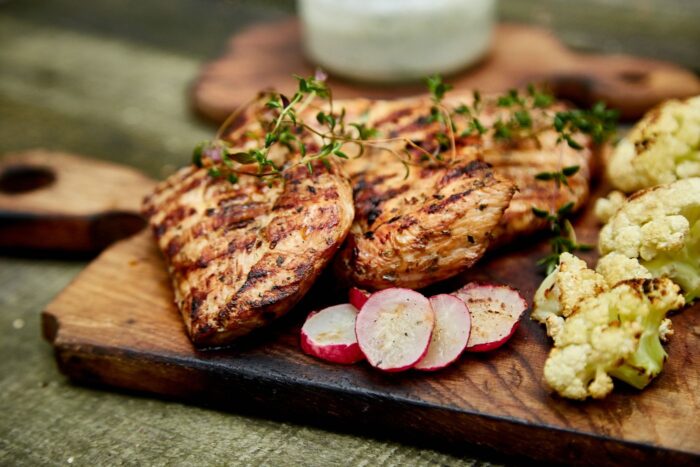
Most liver experts – and I (a former patient who managed to reverse NAFLD) agree: white meat is your best choice for fatty liver, while red meat and any processed meats should be avoided if you want to follow a healthy diet for fatty liver.
This means that we should always try to consume the white chicken meat (aka chicken breast) instead of the thighs or wings. The latter might be more tasty indeed, but they’re also more unhealthy, as they have more fat. The same goes for skin, unfortunately.
Let’s check out a comparison table below and see how things actually stand when it comes to chicken breasts vs skinless chicken thighs (skin would add even more fat) for NAFLD for 100 grams:
| Element | Chicken Breast | Chicken Thigh |
|---|---|---|
| Calories | 165 | 220 |
| Fat | 3.5 g | 15 g |
| Saturated | 1 g | 4 g |
| Protein | 30 | 15 |
| Carbs | 0 | 0 |
Looking at things in perspective, we can see clearly that breasts are a much better choice than thighs, as long as we’re talking about chicken.
However, even chicken thighs are not horrible when it comes to the number of calories and fat content. This means that every now and then, for those who prefer the taste, a portion of boneless, skinless chicken thighs is allowed.
I consider everything that has under 15 grams of fat acceptable for eating, and the thighs are just there. However, it’s pretty obvious that the breasts are the better choice in terms of nutrition – way less fat and a lot more protein. Perfect!
How Much Chicken Is Safe? (And How Often Should You Have It?)
The guidelines below will be influenced by other things you eat. For example, if you also consume other types of meat, you should reduce the amount of chicken you consume. Make sure that overall, you’re covering your daily needs for protein and all the other nutrients.
With these in mind, here is what should work for most people when it comes to chicken breasts:
Portion size: Stick to 100 grams (3.5 oz) of cooked, skinless chicken per meal and always try to pair it with vegetables, from broccoli to cucumbers, cauliflower to eggplants, zucchini, vegetable salads (especially beets), and so on, but only minimal amounts of potatoes (if any).
How often: 3-5 times a week should be more than enough. You could eat lean poultry every day, but it’s even better if you alternate it with plant proteins and fish every now and then, which also helps with variety and battling dieting fatigue.
How to cook chicken for fatty liver
I already mentioned that the way you cook your chicken is very important in keeping it healthy or making it one of the fatty liver foods you should stop eating.
Yes, chicken breasts are ok for fatty liver, but this doesn’t mean that you can deep fry them or turn them into a schnitzel or anything like that.
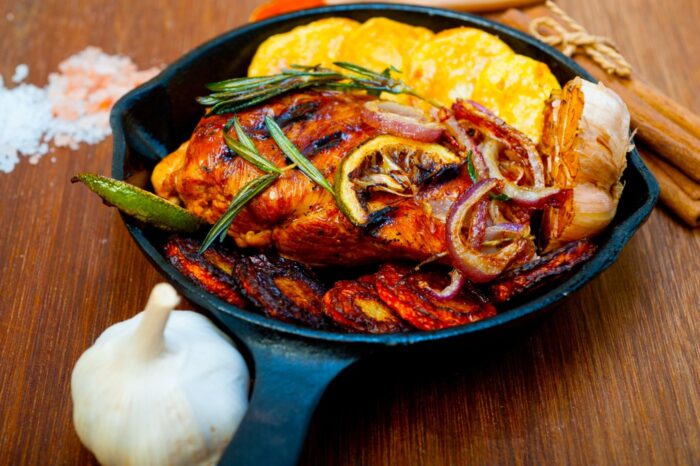
Frying any type of food will greatly increase the amounts of fat, saturated fat and cholesterol, as well as the overall number of calories. The same goes for all types of batter, most dressings, and sauces – especially if you buy them from stores, where they also have various other chemicals, including preservatives and aroma enhancers, packed in.
Also, always pair your chicken with a healthy side dish. No fries or anything like that. I recommend pairing them up with a vegetable salad, grilled veggies, or anything like that.
When it comes to cooking, you don’t have a lot of options, but fortunately they all result in tasty chicken that you can still enjoy. Here’s how I recommend you to cook chicken for fatty liver:
- Grilled: just throw it on a grill pan or outdoor grill with no extra oil and eat when ready. Plain and simple!
- Baked: you can marinade it for a few hours to a day before (make your own without oil, sugar, or other fats), or bake it as it is on baking paper.
- Boiled: Throw in chopped vegetables for flavor. If you’re not a fan of plain boiled chicken (I’m not!), turn it into soup. Hearty and perfect for the colder days of the year.
I personally got used to eating the chicken baked and have eaten it like this during my dieting for reversing fatty liver (and reverse it I did!).
It does get pretty dry when cooked like this, and my family doesn’t like it as much… but it’s easy to make and still tastes good in my opinion.
A lot less mess than grilling it – and you can easily throw next to it some carrot sticks and onions and other vegetables for a complete meal.
Quick-Reference: Chicken & Fatty Liver At a Glance
- Choose skinless chicken breast for the leanest option.
- Limit portions to 100g per meal, 3-5 times/week.
- Cook by grilling, baking, or boiling – never fry or add batter.
- Avoid the skin, fatty sauces, and processed chicken.
- Pair it with lots of vegetables and optionally some whole grains.
- Keep it interesting with herbs and spices, not oils or sugar.
Is Chicken Liver Good for Fatty Liver?
Frowning upon by many, chicken liver is a great food for NALFD if cooked healthily. Chicken liver has low fat contents, lots of protein and tons of vitamins and minerals.
For example, 100 grams of chicken liver only have 4.8g of fat, 24.5g of protein and just under 1g of carbs.
But you also get a ton of important vitamins and minerals – Vitamin A (200% of the recommended daily dose), B-complex vitamins (between 50 – 200%), iron (50%), Selenium (60%) and various other vitamins and minerals.
In other words, there’s a lot of good stuff in chicken liver, as opposed to eating pork or other red meats.
But it has one big con, unfortunately: it’s high in cholesterol. Eating 100 grams of chicken liver will get you just a bit over the recommended daily dose of cholesterol.
However, unless you already have high cholesterol, eating chicken liver in moderation and small amounts (portions of 80 grams maximum) shouldn’t be much of a problem; on the contrary. It has too many important nutrients to fully ignore!
Just a word of caution: make sure that you cook the liver in a healthy way, without added oil or sauces that bring up the calorie numbers, as well as the fat and carb values.
Conclusion
While chicken is not one of the superfoods for NAFLD, it’s one type of meat that you don’t have to cut off the list when working to reverse your condition.
However, you will most likely have to adjust how much you eat and, most importantly, how you prepare it.
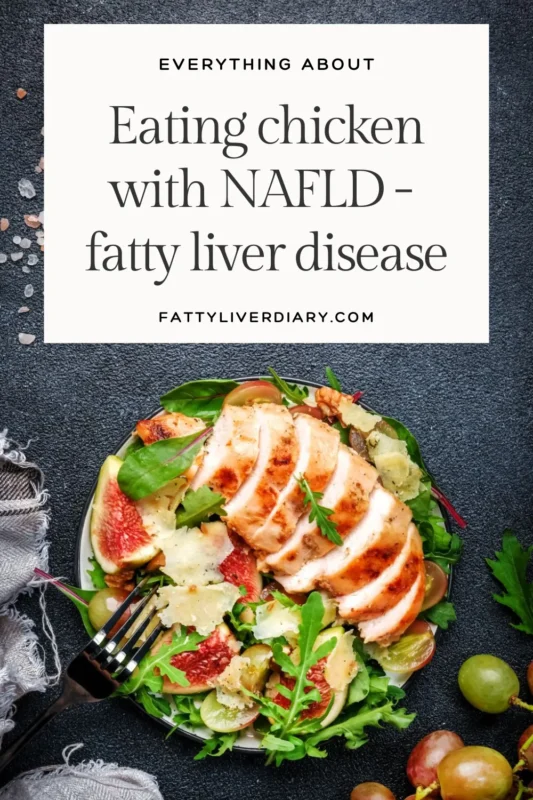
Focus on lean, skinless cuts, healthy cooking, balanced sides, and your liver will be thankful. If you’re ever unsure, check with your doctor or dietitian and if you still have questions or thoughts you’d like to share, let us all know in the comments down below.

I was diagnosed with fatty liver in 2014 and successfully reversed it by mid-2015 using a natural diet and lifestyle changes. Since then, I’ve dedicated over a decade to researching this condition and helping others navigate their own recovery. I am the author of ‘From Fatty Liver to Healthy Liver’ and the founder of this community. My goal is to translate complex medical studies into practical, real-world advice that actually works, combined with my personal experience on the matter.
If I eat chicken thighs 4 times a week would that be to much.
What about eggs, can I eat them
If those are skinless, it should be OK. Even with skin, it could still be OK as long as, at the end of the day, you are within the daily limits for fats (and carbs – but thighs don’t have any).
Regarding eggs, I have an in-depth article here: https://www.fattyliverdiary.com/can-you-eat-eggs-with-a-fatty-liver/
Do you have any information for a fatty liver maybe from wine?
Since being diagnosed, we’ve switched to a 90% Mediterranean diet.
It’s usually unlikely, especially if the diagnosis is non-alcoholic fatty liver disease, but even so, unfortunately, you will have to stop drinking any type of alcohol to be 100% on the safe side and reverse it – I have a few articles on the matter on this website, including one about non-alcoholic wine, which might be a solid alternative.