
Note: This article is based on my personal experience and research. I am not a doctor or a dietitian, and this content is for informational purposes only. Always consult with your healthcare provider before making any changes to your diet or lifestyle.
Cinnamon has a well-earned reputation for being both delicious and healthy. Ask around, and you’ll hear it praised as a liver-friendly spice packed with antioxidants.
But is it really? And most importantly, is cinnamon good for you if you have a fatty liver disease? This is what we’re going to talk about in today’s article, because the answer is both “yes” and “no” depending on what type of cinnamon you’re using.
There are two main kinds of cinnamon available for consumption – one that can help your liver and another that may quietly harm it over time. Unfortunately, most of us consume the latter without even knowing that we’re causing potential harm.
My experience with cinnamon and fatty liver
Soon after being diagnosed with MASLD (formerly NAFLD, aka fatty liver disease), I introduced cinnamon – and in large quantities – to my slightly modified Mediterranean diet that helped me reverse my condition.
I knew that it has multiple health benefits. It helps us by reducing inflammation, insulin resistance, blood sugar levels, and many other benefits not related to the liver. (Source here)
It seemed like an obvious choice, so I started having it daily, especially since I like the taste. I would use it to flavor anything from my coffee to yogurts and fruits (like oranges, believe it or not).
Until I stumbled upon an article claiming that cinnamon is actually… toxic. Apparently, it is doing a lot of harm to our bodies, including extra damage to the liver.
Two very different opinions regarding cinnamon, so which one is correct?
After some digging, I realized, as surprisingly as it might sound, that both claims were true. The difference lies in the type you use: Ceylon Cinnamon or Cassia Cinnamon.
They are very much alike (especially when it comes to taste), but the latter is the one that can do harm to your body and especially the liver. And unfortunately, it’s cassia cinnamon that we’re most likely consuming regularly.
Ceylon cinnamon vs Cassia cinnamon
Cassia cinnamon is the cheap, widely available version – the one most people buy without knowing it. Ceylon cinnamon, sometimes called “true cinnamon,” is more expensive but far safer for the liver, having plenty of antioxidants.
In terms of taste, the difference is minimal and I never was able to really say which one is which by tasting them. But you can easily tell the difference if you are to look at them, as you can see in the images below:
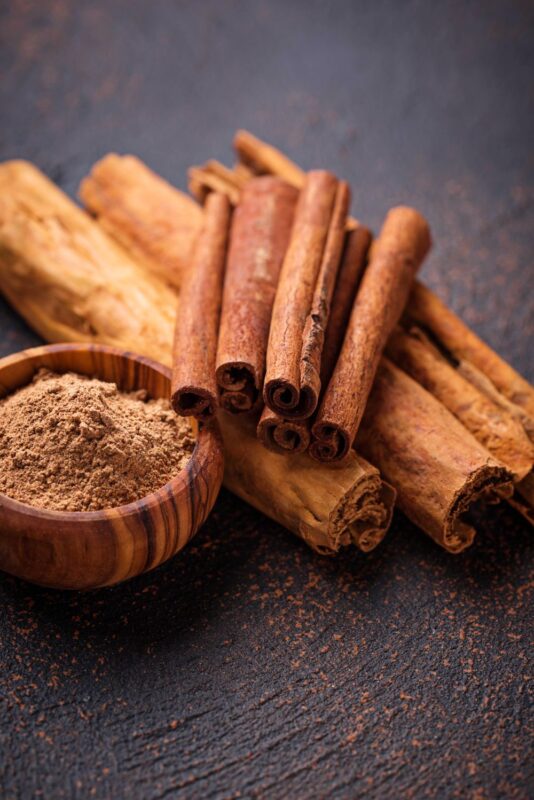
Here is another, also comparing the powder from each (unfortunately, both are very similar when powdered, hence the need to read the label and see what type you’re getting):
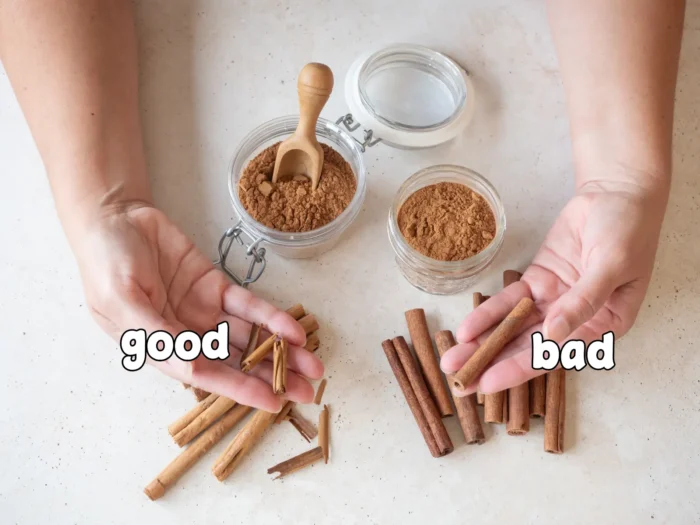
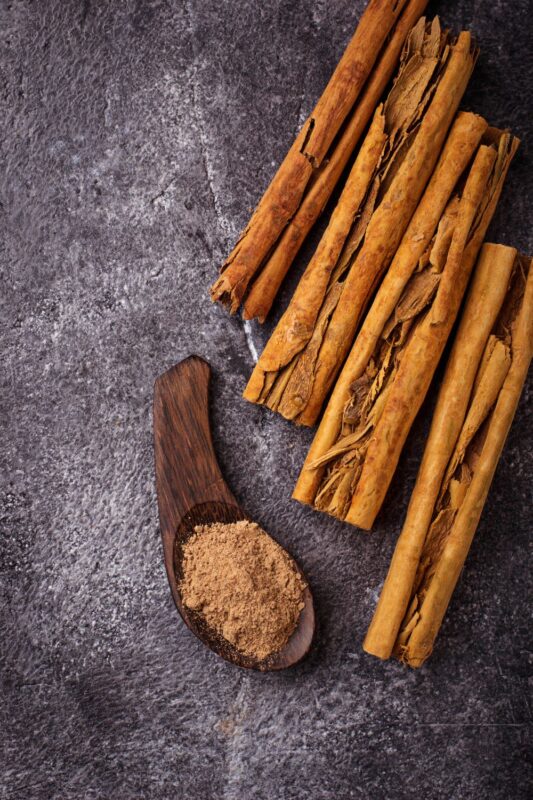
On most occasions, the photo on the packaging alone will tell you which type of cinnamon you’re getting (because it’s showing the stick): Ceylon sticks are thinner, made up of multiple delicate layers, while Cassia sticks are thicker and coarser.
When reading the list of ingredients, always look for “Ceylon cinnamon” or “Cinnamomum verum”. If it’s listed just as “cinnamon,” then it’s most likely the wrong kind.
Also read: Is Ginger Good for Fatty Liver Disease?
Why is regular cinnamon bad and Ceylon cinnamon good?
When I began comparing them, I learned that Cassia cinnamon contains a compound called coumarin in far higher concentrations than Ceylon cinnamon does: up to 63 times more coumarin compared to Ceylon cinnamon powder (source here).
Coumarin isn’t dangerous in small amounts, but in large doses or over long periods, it can cause liver damage, particularly in people whose liver is already compromised, which includes anyone with MASLD.
(If you want some authority sources on the toxicity of Coumarin, you can read all the details in this Medical News Today article or on Wikipedia)
Ceylon cinnamon, on the other hand, has only trace amounts of coumarin. It’s rich in antioxidants, polyphenols, and other compounds known to support healthy metabolism and reduce inflammation, all of which are beneficial for a fatty liver.
Should you stop eating cinnamon if you have a fatty liver?
Definitely not! But you should switch to consuming the Ceylon variety instead.
According to a study available on the US National Library of Medicine National Institutes of Health (here), the tolerable daily intake for coumarin is 0.05 mg per pound (or 0.1 mg per kg) of body weight.
Getting to actual numbers, for a person that weighs 70 kg (155 pounds), the safe amount would be a maximum of 7 mg of coumarin per day. This can be reached in as little as 1/2 teaspoons of Cassia cinnamon (or even less).
However, since a fatty liver is already with problems, I would take even more precautions and consider a maximum of 3.5mg in this case – in other words, even small amounts of “regular” cinnamon can become dangerous, especially if consumed daily.
Therefore, switching to using Ceylon cinnamon exclusively is the best idea, since it only has traces of coumarin, and you can safely consume over 1 teaspoon per day (which most people don’t consume anyway).
With cinnamon having so many antioxidants, fat-reducing capabilities and anti-inflammatory capabilities, it would be bad to stop having it – or have it in amounts that are too small to have any effect.
I recommend choosing organic Ceylon cinnamon if possible, in order to keep things as safe and healthy as possible. You can easily find it on Amazon, from a trustworthy source, knowing that you get the real thing and not the bad one.
These are the Ceylon cinnamon brands that I use and recommend (affiliate links):
- True Organic Pure Ceylon Cinnamon Powder – my favorite.
- Simply Organic Ground Ceylon Cinnamon – solid alternative.
They are a bit more expensive than regular cinnamon, as you can see, but not really an effort to make the switch, in my opinion. Plus, it’s totally worth it for all the health benefits!
In general, it’s best to switch to eating organic foods as often as possible, if you can afford it.
What are the health benefits of eating cinnamon?
Both Ceylon and Cassia cinnamon have been studied for their health-promoting compounds – but only Ceylon can be safely enjoyed long term if you have a liver condition.
So the general knowledge that “cinnamon is healthy” is not wrong – it’s just that this statement usually doesn’t take the potential bad effects of the Cassia type into consideration.
Cinnamon is rich in polyphenols, a class of antioxidants that help neutralize oxidative stress, one of the key factors behind liver inflammation and fat buildup. For anyone dealing with MASLD, that’s a solid advantage.
Research suggests that cinnamon can:
- Improve insulin sensitivity, helping your body use glucose more efficiently. That means lower blood sugar spikes and less fat accumulation in the liver.
- Reduce inflammation, another major contributor to liver stress.
- Lower blood triglycerides and LDL cholesterol, supporting overall metabolic health.
- Support cardiovascular and brain health, particularly through its antioxidant action.
For people with fatty liver, these effects indirectly support recovery by improving the metabolic environment that led to liver fat buildup in the first place.
IMPORTANT TO KNOW! Cinnamon alone won’t reverse the condition – no single food can, not even superfoods – but as part of a balanced diet rich in vegetables, lean proteins, and healthy fats, it might help a bit.
Also read: Eating popcorn with fatty liver disease.
Conclusion
All things considered, cinnamon is safe to eat as long as you have the “real” one that offers all the benefits, without the huge spike of coumarin.
Even though the Ceylon cinnamon is more expensive, remember that it’s your life and health that you’re talking about and it might be worth spending a bit more on that – especially since we’re talking about actual medical studies that confirm this.
So your best choice is to keep having cinnamon, but the Ceylon type.

I was diagnosed with fatty liver in 2014 and successfully reversed it by mid-2015 using a natural diet and lifestyle changes. Since then, I’ve dedicated over a decade to researching this condition and helping others navigate their own recovery. I am the author of ‘From Fatty Liver to Healthy Liver’ and the founder of this community. My goal is to translate complex medical studies into practical, real-world advice that actually works, combined with my personal experience on the matter.
Thanks for this very informative article. It made me think of something I’d read several months ago about Turmeric and how it can be bad for the liver. I was drinking “Golden Milk” (almond milk, local honey, turmeric, ground black pepper) once a day for 3 years, believing it was good for my body. When I was diagnosed with NAFLD, a friend said it was probably the turmeric. Now, I am concerned about cinnamon, for most certainly, what cinnamon I do consume is of the cheaper quality. Thank you again for all you do to keep us informed.
Debbie in Gatlinburg, TN
We’re always learning new things, Debbie. I had no idea either about this until after being diagnosed with a fatty liver and doing a lot of research. And now I’m off to research turmeric as well because i also knew it was good 🙂
thanks for great info! would love if you’d contribute something to my blog so my followers can meet you. pls email me if you’re interested. Happiness Between Tails dot com