
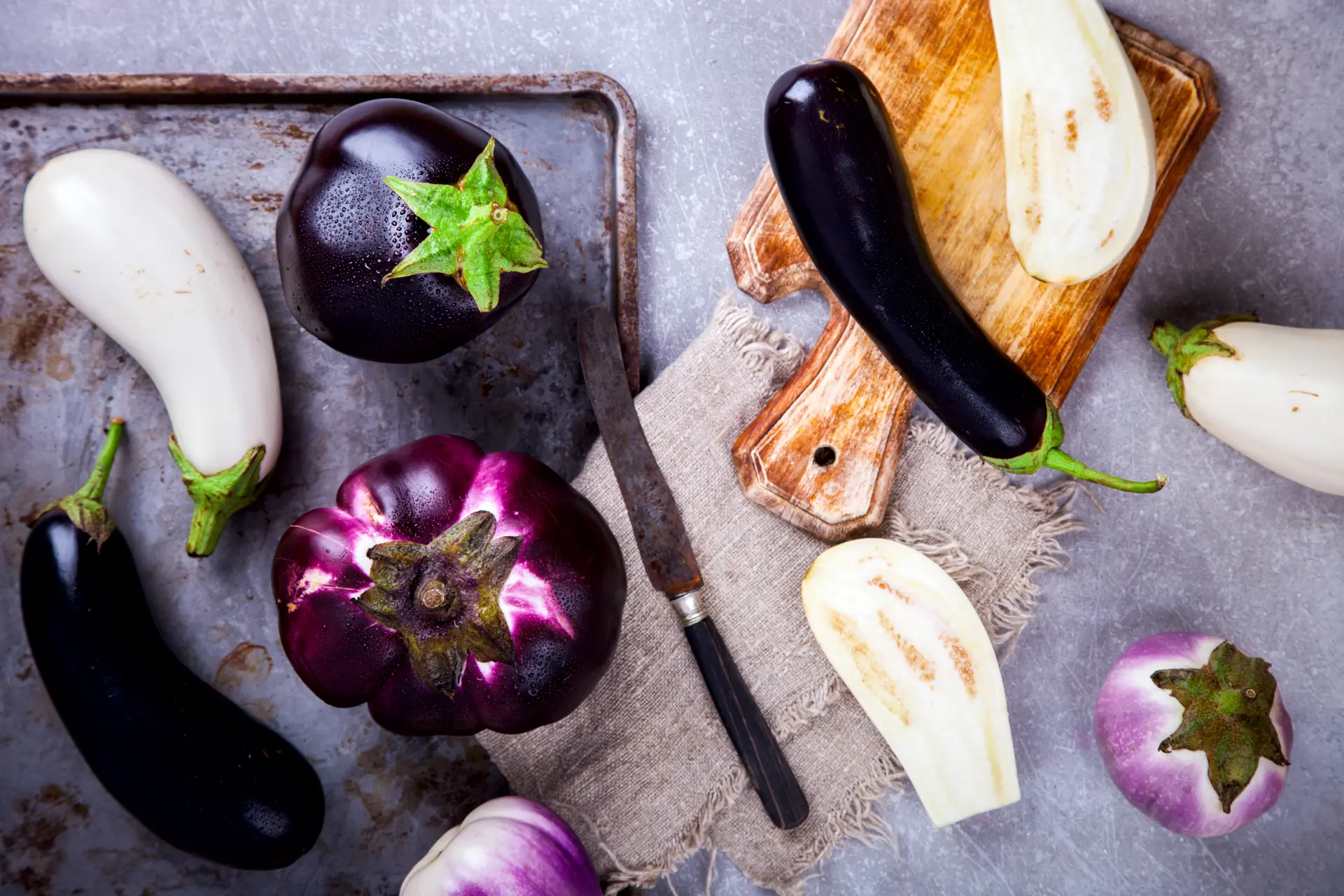
After being diagnosed with a fatty liver disease, many foods end up on a blacklist, while others are in a gray area. More often than not, you end up not knowing if you can or can not eat a specific food. Today, I’m here to talk to you about eggplants and fatty liver disease (MASLD)
And to give you the short answer right away: yes, eggplant is a fantastic and safe choice for your liver, as long as you consume it in moderation and keep some important things in mind.
The (main) culprits for a fatty liver are carbohydrates and too much fat. Since eggplant is low in both, it makes sense to include it in your diet, as it is the case of most vegetables and fruits. Check out my list of fruits to eat with fatty liver disease here.
But let’s jump right into the science, me personal experience and approach, as well as all the practical tips you need to know about eating eggplants with MASLD.
Why Eggplant Is Beneficial for MASLD
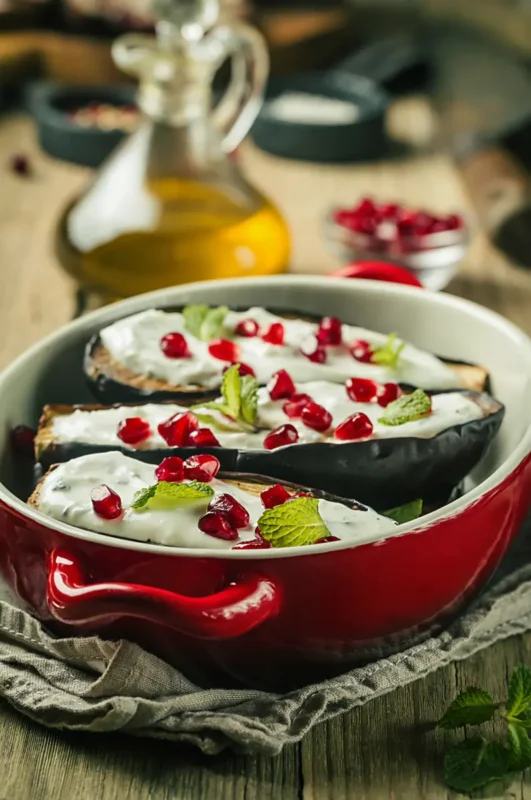
Eggplants are on my list of good foods for a fatty liver. It’s a naturally occurring food, high in nutrients, but low in fat and carbs. This is exactly what our liver requires and must be fed in order to be healed and stay healthy.
In A Guide to What and How to Eat by the Baylor College of Medicine, it’s mentioned that an excess of simple carbohydrates, such as sweets and starchy foods, is converted into fat by the liver, which eventually overwhelms it.
Vegetables like eggplant help counteract this because of their high fiber content. Fiber helps your body get rid of excess fat and reduces inflammation. Both of these are things a struggling liver needs.
Eggplants also happens to be low in starch and high in other vitamins and minerals, making it a vegetable worth eating regardless of your health status.
They contain antioxidants, such as nasunin, which protect liver cells from oxidative stress caused by free radicals. Too many free radicals in the liver cause oxidative stress, which can lead to liver diseases, according to the study Antioxidants in Liver Health.
To actually get these antioxidant benefits, make sure you leave the skin on when cooking! The nasunin is mostly found in the peel, so peeling it strips away some of the best nutrients.
MUST KNOW: The eggplant belongs to the nightshade family. While it is great for the liver, if you have specific autoimmune sensitivities or chronic joint inflammation linked to nightshades, you must consult your doctor before eating it.
Nutritional Information for Eggplant (Per 1 Cup Cooked, or 100 grams)
- Calories: 35 kcal
- Protein: 0.8 grams
- Fat: 0.2 grams
- Saturated Fat: 0.04 grams
- Polyunsaturated Fat: 0.1 grams
- Monounsaturated Fat: 0.01 grams
- Carbohydrates: 5.7 grams
- Dietary Fiber: 2.5 grams
- Sugars: 3.2 grams
- Cholesterol: 0 mg
- Sodium: 1 mg
- Potassium: 188 mg (5% of Daily Value)
- Magnesium: 11 mg (3% of Daily Value)
- Vitamin C: 1.3 mg (2% of Daily Value)
- Vitamin K: 2.9 mcg (4% of Daily Value)
- Folate: 14 mcg (3% of Daily Value)
- Vitamin B6: 0.08 mg (5% of Daily Value)
As you can see, we get great benefits from eating eggplant, like decent amounts of fiber, vitamins, and minerals, packed with very little fat and low amounts of carbs. This is exactly what we need to reverse MASLD.
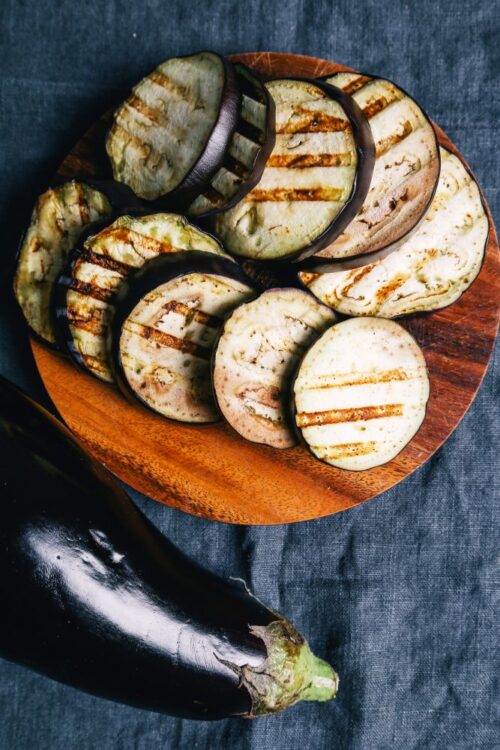
Fiber works to protect your liver. According to an article in Nature Communications, fiber has beneficial effects on liver fat content and it’s associated with a 31% reduced risk of liver cancer.
Eggplant is also a good source of magnesium – an important mineral for liver health. In Magnesium Intake and Mortality…, it’s suggested that people who consume adequate magnesium have a reduced risk of mortality due to liver disease.
And this is important because the same research points out that people with fatty liver disease are at a serious risk of having low magnesium levels.
How Much Eggplant Can You Eat with Fatty Liver Disease?
I always told my son when he was little that he could eat as many vegetables and fruits as he wanted. This generally applies to eggplants as well, but do not take it entirely literally.
As it is the case with everything related to fatty liver disease, moderation is key.
And when it comes to eggplants, it’s even more important because they contain solanine, a compound produced by the plant which can be harmful to humans.
However, the amount in a standard serving is so incredibly small that you would have to eat an impossible amount of eggplant in a single sitting to do yourself any harm. You are perfectly safe with regular (and even higher than usual) portions.
According to America’s Test Kitchen, you should eat 1,000 eggplants in a single sitting to do any harm.
The key is to listen to your body.
If you have eaten copious amounts of eggplant and are feeling nauseous or otherwise not yourself, maybe you ate too much and should have less next time.
But, as I recommended in my weekly meal plan for fatty liver, eating up to an eggplant every now and then is acceptable and considered healthy, part of a liver-friendly diet.
The Best Ways to Cook Eggplant for Liver Health
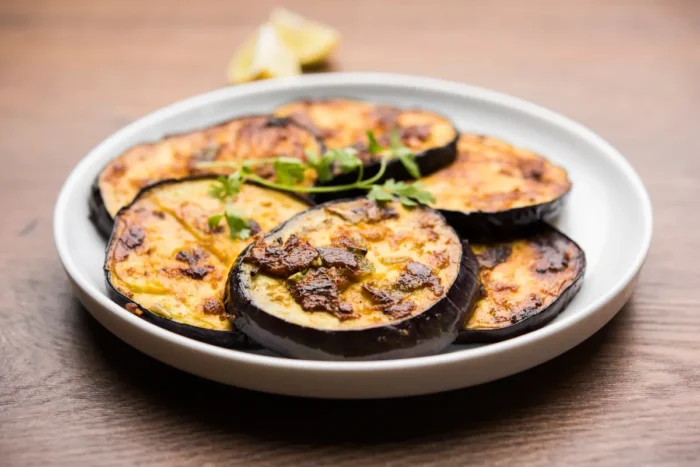
Eggplant is often fried, which is not good for fatty liver due to the added saturated fats, trans fats, and carbohydrates brought in by frying. You’ll find fried eggplant on pizza and other various dishes, and fried food is something we should stay away from.
Frying (or adding sugars) is a way to make a healthy food unhealthy. Even the healthiest food out there will become harmful if you fry it or if you add a few scoops of sugar on top.
So make sure to cook all your food right – for example, air frying is still acceptable for those with a fatty liver.
When cooking eggplant, use only a small amount of extra virgin olive oil, but ideally use none and replace oil with water.
Eggplant is extremely porous and will quickly soak up whatever cooking oil you’re using. Ensure it’s a healthy oil (EVOO is the best choice) and use it in moderation.
Healthy methods of cooking are roasting, steaming, sauteing, or baking – my favorite is roasting. You should try to use these instead of the added oil. I got used to cooking without oil and the effect on taste is not as bad as you might think.
Here is a super fast preparation idea you can try today. Toss cubed eggplant with a pinch of salt, some oregano, and a light mist of water, then air-fry at 200°C for about 15 minutes.
You can also read about my favorite way of eating eggplants in my article sharing over 15 fatty liver-friendly recipes, or the one where I share some lunch ideas.
Conclusion
Eggplant is a great option for fatty liver disease and it can be an active part of your healing diet. Because it has so many vital nutrients for your liver, you can eat it with complete peace of mind.
It is a great source of fiber, antioxidants, and magnesium, which all significantly contribute to a healthy liver and help combat the effects of MASLD.
Remember to keep the skin on for those extra antioxidants, prep it smartly to avoid soaking up oil, and never eat it fried!
Curious about other foods as part of a healthy, fatty-liver disease friendly diet? I recommend checking out some of my other articles below:
- Can You Eat Pasta with Fatty Liver?
- Can You Eat Cereal if you have a fatty liver?
- Can You Eat Chocolate if You Have Fatty Liver?
- Can You Eat Eggs with a Fatty Liver?
- Can You Eat Tofu if You Have a Fatty Liver?
Even though I think that I covered the topic entirely, if you still have questions regarding eggplant and fatty liver disease, let me know by commenting down below!

I was diagnosed with fatty liver in 2014 and successfully reversed it by mid-2015 using a natural diet and lifestyle changes. Since then, I’ve dedicated over a decade to researching this condition and helping others navigate their own recovery. I am the author of ‘From Fatty Liver to Healthy Liver’ and the founder of this community. My goal is to translate complex medical studies into practical, real-world advice that actually works, combined with my personal experience on the matter.