
Note: This article is based on my personal experience and research. I am not a doctor or a dietitian, and this content is for informational purposes only. Always consult with your healthcare provider before making any changes to your diet or lifestyle.
One of the most frustrating experiences after being diagnosed with a fatty liver is related to food: you never know if you are allowed to have one food item or another. I am here to help answer these questions, and today we’re going to learn whether you should eat cereal with NAFLD/MASLD or not.
The short answer is yes, you can still eat cereal with fatty liver disease, but most likely you won’t be able to eat what you used to. Just specific types of cereal, in specific quantities, are acceptable for a liver-friendly diet.
The truth is that most cereals on supermarket shelves are closer to candy than breakfast, filled with plenty of sugar (and sometimes extra fat and preservatives) that your liver doesn’t need. But there is still hope, so let’s jump right in and learn everything about eating cereals for breakfast after being diagnosed!
What cereal is good for fatty liver?
Before answering this, remember one important fact: all cereals are high in carbs and we should keep carbs under control when diagnosed with fatty liver disease.
While carbs aren’t automatically bad, modern humans usually consume a lot more than they need. Also, some are absorbed slowly (like those in oats and whole grains and even some fruits) and provide energy without spiking blood sugar.
Others – especially refined carbs and added sugars – get dumped into your bloodstream fast, increasing blood sugar, insulin resistance and putting extra pressure on the liver, which is exactly what we want to avoid.
With these in mind, when it comes to eating cereal, some options are better than others – here’s the golden rule of thumb you should keep in mind:
- Whole-grain, minimally processed cereals (like oats) can be a healthy option.
- Highly processed, sugary cereals must be avoided.
So, you can have cereal – but it should be the right kind, in the right amount, and not every day. And if you want to get more in-depth, learn about good carbs and bad carbs on Healthline, or read my previous article on sugar and fatty liver disease.
Best cereal for fatty liver
After I was diagnosed, I cut out cereals completely from my diet for the first couple of months.
After that – and especially after learning that there are some good options out there – I started consuming the good ones every now and then, and nowadays I have my #1 recommendation below at least a couple of days per week.
So, done right, cereals can make your mornings easier, give you variety and still help you stick to the liver-friendly diet you’re following.
1. Oats
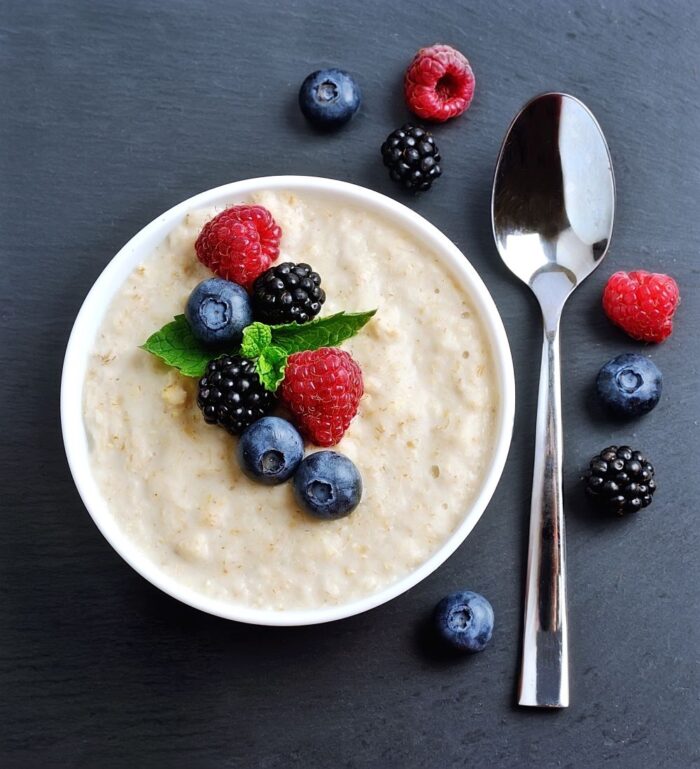
This is the best choice: oats are high in fiber, naturally sugar-free, filling, and offer various other health benefits to round things up nicely.
I recommend either Quaker Steel Cut Oats, which are my favorite, or Bob’s Red Mill Oats if you look for organic too (affiliate links). Try to avoid instant ones, as they usually have added sugars and flavors.
My go-to method of cooking is, more recently, preparing overnight oats (you can check out my recipe here). You can also boil them in water or half water, half low-fat milk (or unsweetened almond milk) and top them with frozen berries, a few banana slices and a sprinkle of cinnamon.
In other words, keep it as natural as possible, and it will be healthy. This was my go-to cereal breakfast after I was diagnosed, and it worked for me, having reversed my condition in the meantime.
2. Muesli
Muesli is basically various whole grains with extras – nuts, seeds, and dried fruit. It’s heartier, more filling thanks to the added nuts, and gives you a bit more variety.
Examples I’ve tried and enjoyed:
- Bob’s Red Mill Old Country Style Muesli
- Seven Sundays Blueberry Chia (affiliate link – note: it has added honey, so extra carbs!)
3. Sugar free whole grain cereal
If you really miss traditional cereals, there are plenty of sugar-free or unsweetened versions made from whole grains or cornflakes.
They’re not as nutritious as oats or muesli (fiber is low, carbs are high), but as an occasional treat, they’re better than sugary alternatives. Speaking of cornflakes, make sure to check out my previous article sharing my cornbread without cornmeal recipe.
Portion Guide
Moderation is key when it comes to everything related to fatty liver disease, cereals included. You will probably be surprised to see what a portion looks like (I sure was!), but here’s how much you should use:
- Oats: around 40g dry (around 4 tablespoons)
- Muesli: 50g
- Cornflakes or similar (unsweetened): ~30g (a small bowl, not overflowing)
Try to balance these with added protein and/or healthy fats (like nuts, seeds and/or low-fat yogurt) and for extra flavor, add some berries and other fruits. These slow digestion, steady blood sugar, and keep you satisfied longer.
What cereals NOT to eat if you have a fatty liver?
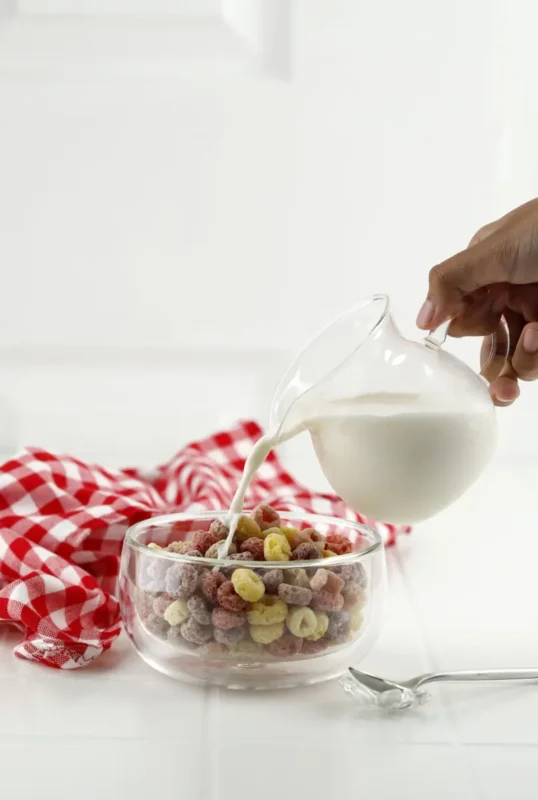
Most likely, the breakfast cereal that you used to eat can no longer be had. The truth is that most of the cereals that we can find in stores should have a big “NO” stamped on them. And that goes even for healthy individuals, as we can easily find out.
Most breakfast cereals out there, no matter if we’re talking about cornflakes or all sorts of other grains, have a lot of added sugar. Even those that have added Honey might have plenty of other sweeteners and should be avoided.
In order to make them tasty and appealing, companies also add various flavors, preservatives, chemicals, and sometimes even hydrogenated fat, which are all bad for us.
As some are saying, they’re nothing but junk food with added vitamins and minerals. And even those don’t make them acceptable.
So when you are shopping for your breakfast cereal, always check the list of ingredients.
Conclusion
Cereal doesn’t have to be off-limits if you follow a healthy fatty liver disease diet. The key is making smart choices (pick whole-grain, no-sugar options), controlling portions, and pairing them with protein, healthy fats, and a bit of fruit.
In other words, if you stick to oats, unsweetened muesli, or the occasional sugar-free cereal, you can still enjoy a quick and comforting breakfast without setting back your progress.
Additional reading
I know that finding what to eat for breakfast is a real challenge when you start dieting to reverse your fatty liver. Therefore, I have a list of breakfast ideas to help you get started!
I have also created an extremely useful article – a monthly shopping list that is fatty liver friendly. This way, you know that you’re buying the right stuff for your diet!
If you want to find out more about foods that you can or are not allowed to eat after being diagnosed with NAFLD, either use the search bar on the website or check out these popular selections: eating bread, drinking wine, or eating bananas if you have a fatty liver.
Stay healthy and stick to your diet. You can reverse this!

I was diagnosed with fatty liver in 2014 and successfully reversed it by mid-2015 using a natural diet and lifestyle changes. Since then, I’ve dedicated over a decade to researching this condition and helping others navigate their own recovery. I am the author of ‘From Fatty Liver to Healthy Liver’ and the founder of this community. My goal is to translate complex medical studies into practical, real-world advice that actually works, combined with my personal experience on the matter.
i enjoy knowing what to eat and what not to eat.
How did you reverse your fatty liver?
Are multi grain Cheerios okay to eat with non alcoholic fatty liver?
They have quite a bit of sugar, so I would stay away from them.
How about Honey Bunches of Oates with Almonds for NAFLD ?