
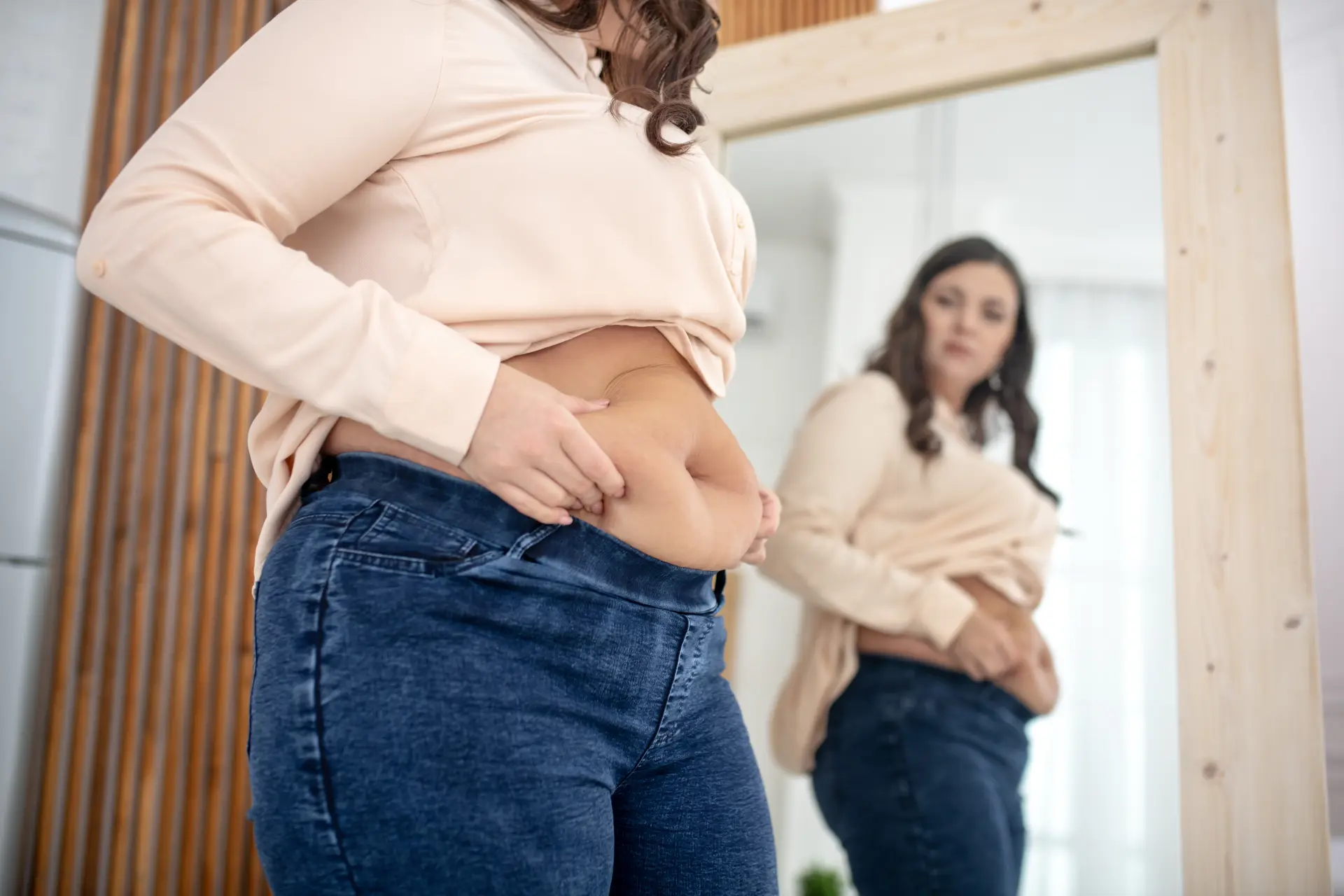
What happens if you lose weight too fast when starting your diet to reverse fatty liver? You’ve probably seen or heard in many places that rapid weight loss can make your fatty liver worse
You are doing everything possible to get healthy, yet you suddenly wonder if you are accidentally causing more harm. Worry not, I’ve been in your shoes and today I will explain everything you should know about this.
What Does “Too Fast” Really Mean?
Generally speaking, a healthy rate of weight loss is up to 2 pounds (around 1 kg) per week. If you’re around this mark, there’s no reason to worry. But what if you lose weight a bit faster, especially during the first few weeks of dieting?
For example, when I started dieting to reverse my fatty liver, in the first month or two, I was actually losing up to 3.3 pounds (1.5kg) per week.
That was a bit faster than what’s recommended, and I was concerned. But even with that faster rate, I was able to reverse my fatty liver and regain my health.
I was pretty overweight, on the brink of obesity, with a BMI of around 29. When I dropped my caloric intake from whatever I was eating to a healthier amount of a bit under 2,000 calories per day, the caloric deficit was so great that my weight loss was more substantial. So my body responded by shedding pounds quickly.
However, as time went on, my rate of weight loss slowed down, even though I was still eating the same amount. This plateau is natural and expected. And that is when I started adding exercise into my life, as well as dealing with dieting fatigue.
If you want a detailed blueprint on losing weight the right way to help your liver, I highly recommend checking out Reverse Your Fatty Liver. The book lays out the dietary shifts flawlessly and helped me build a sustainable, long-term plan.
The Early Drop: Understanding Water Weight
Before you panic about damaging your liver, consider the fact that the first week or two will see you drop mainly water weight.
When you drastically cut calories and carbohydrates when switching to a liver-friendly diet, your body starts burning through its stored glycogen for energy.
Glycogen holds onto a significant amount of water, hence the potentially higher drop in weight early on. But this is normal – something I went through myself, as I mentioned earlier, but something worth knowing so you get that extra peace of mind.
It means your body is responding to the dietary changes, but it does not mean your liver is suddenly overwhelmed by rapidly dissolving fat tissue.
Now, of course, if the rapid weight loss continues over a longer period of time or if you can’t directly associate it with your new lifestyle changes, it could indicate other problems. In either case, the best route is to bring it up to your doctor.
Why Does Rapid Weight Loss Affect Fatty Liver?
When you lose weight too fast, your liver can get overwhelmed. When fat is broken down quickly, it floods your bloodstream with fatty acids.
Your liver is already under stress, dealing with fat buildup from MASLD (formerly NAFLD), and the extra fatty acids can add even more pressure on the struggling organ.
Clinical data from organizations like the American Association for the Study of Liver Diseases (AASLD) indicates that extreme rapid weight loss can sometimes trigger worsening liver inflammation or even temporary scarring.
There is no universally agreed-upon figure for what constitutes immediate danger, but dropping more than 3 pounds (1.4 kg) of actual fat per week for a sustained period is generally considered unhealthy by the medical community.
Not just for the liver, but also for your body as a whole, it can also potentially result in nutrient deficiencies and muscle loss.
The truth is that any type of extremely fast rapid loss is not sustainable in the long term either. So even if you lose 3 kilos per week (which would be considered unhealthy), you won’t be able to stick to such a diet in the long term.
The fight to reverse fatty liver is a marathon and it requires a permanent change in the eating habits that we have, so it’s better to go slow and steady – any type of extreme fasting or crash diet could prove unsustainable.
Slow and steady wins this race. That’s how I did it and this is how I recommend your approach to be as well, especially because you need to stick to this new way of eating for life.
My Experience and What You Should Watch Out For
If you are losing weight at an alarming rate and there’s no logical explanation for this, you should consult your physician immediately. Rapid weight loss without an apparent reason is not healthy and an expert’s opinion should be sought ASAP.
In my case, I got worried seeing that I was losing weight so fast after starting my fatty liver diet, and after just a couple of weeks, I scheduled another meeting with my hepatologist.
Everything was OK in my case – she analyzed what I was eating and concluded that I was overdoing it a bit, but she wasn’t really concerned about this. I wasn’t starving myself, just eating a lot healthier though.
This is what happens when you jump from eating lots of fatty and sugary foods to eating zucchini, eggplants, and other healthy options. And, of course, no soda.
If you are seeing fast results, make sure that your body’s basic needs are met. Losing weight too quickly can put a lot of stress on your liver, especially if your diet isn’t balanced.
Make sure you are getting the right vitamins and not cutting out major macronutrient groups entirely. Yes, it is tempting to restrict calories drastically to speed up the healing process, but doing so is not sustainable long term.
So as long as you do follow a diet that feeds you way fewer calories than what you used to have, there probably is nothing wrong. But I still recommend playing it safe like I did and visiting the doctor again, just to be sure that all is OK.
A Marathon, Not a Sprint
The journey to reverse fatty liver is just that – a journey. It’s not about how fast you can lose weight but rather how sustainable those changes are. It requires a permanent shift in the way you eat and live, which is difficult (but you get used to this).
And yes, it takes time. It took me 1 year and a half to reverse fatty liver disease. Still, the rewards are worth the patience.
If you are just starting out, do not panic if your weight drops quickly in the first two weeks.
Remember what we discussed about water weight and the initial shock to your system. Things usually even out after a month, and that is when your real, steady progress begins.
But as I mentioned earlier, if the weight keeps vanishing without a clear dietary reason, call your doctor. Stressing out while reading worst-case scenarios on the internet will not help your liver.
Get a professional medical opinion so you can focus your energy on sticking to your new healthy way of living.
I need your help to keep this website alive! Consider becoming a Patron to help me achieve that. Thank you!

I was diagnosed with fatty liver in 2014 and successfully reversed it by mid-2015 using a natural diet and lifestyle changes. Since then, I’ve dedicated over a decade to researching this condition and helping others navigate their own recovery. I am the author of ‘From Fatty Liver to Healthy Liver’ and the founder of this community. My goal is to translate complex medical studies into practical, real-world advice that actually works, combined with my personal experience on the matter.