
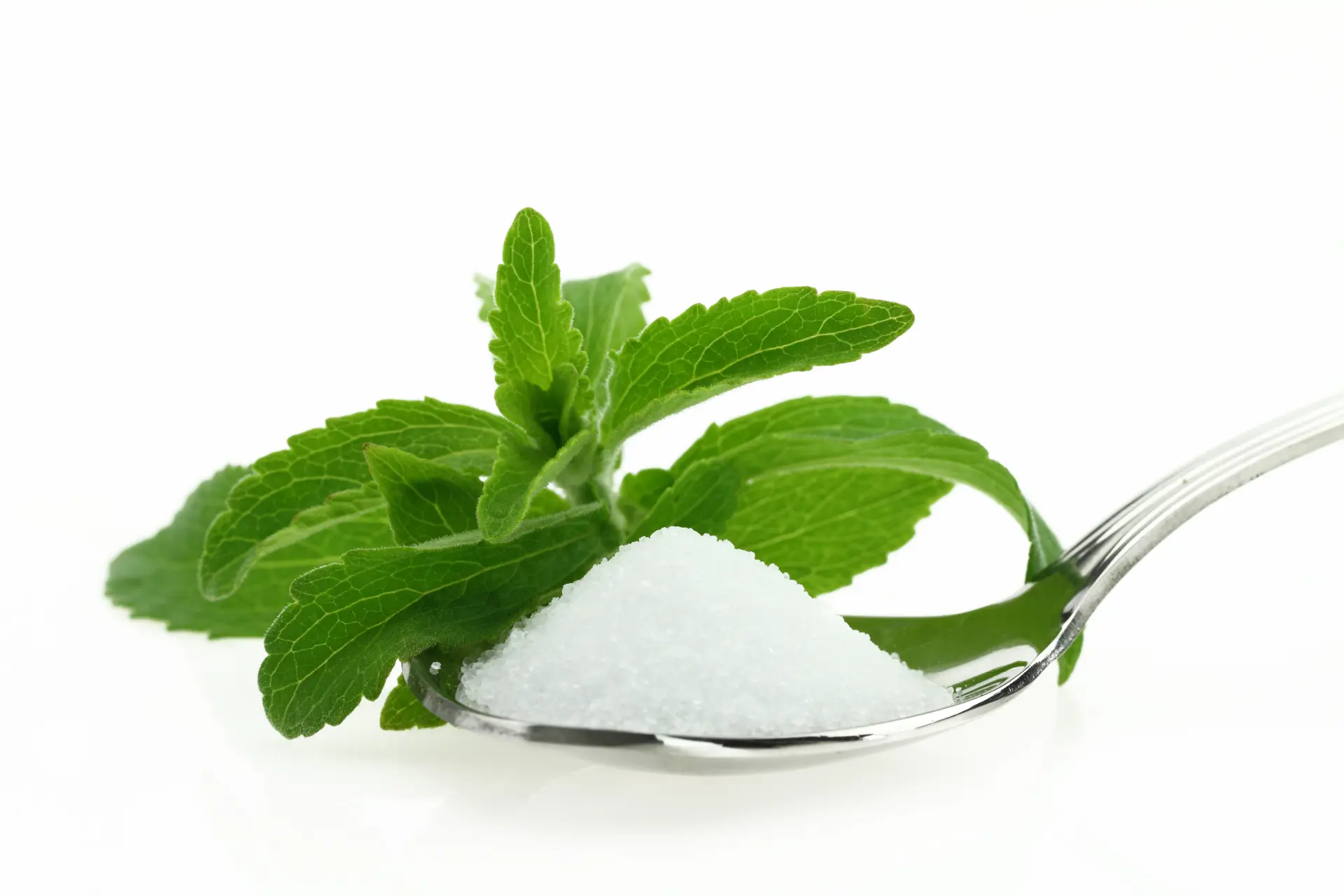
If you have a fatty liver, you probably already know that you shouldn’t eat any refined sugar.
But we can still satisfy that sweet tooth if we’re smart about it and today I am here to talk to you about the best sugar alternatives – sweeteners you can still consume after being diagnosed with MASLD.
I know firsthand how difficult it is to give sugar up (for me, it was more difficult than giving up alcohol, for example). But it has to be done if you want to regain your health.
We have already talked about the amount of added sugars one should consume per day, and now it’s time to look at the most popular alternatives: Stevia, Monk Fruit, and Allulose, along with a few others that come with additional warnings.
Please note: This is not an article talking about diabetes-induced fatty liver disease. If you also have diabetes, things might be different. Consult a doctor before making any decisions, even if you were only diagnosed with a fatty liver disease!
Best Fatty Liver Sugar Alternative: Stevia
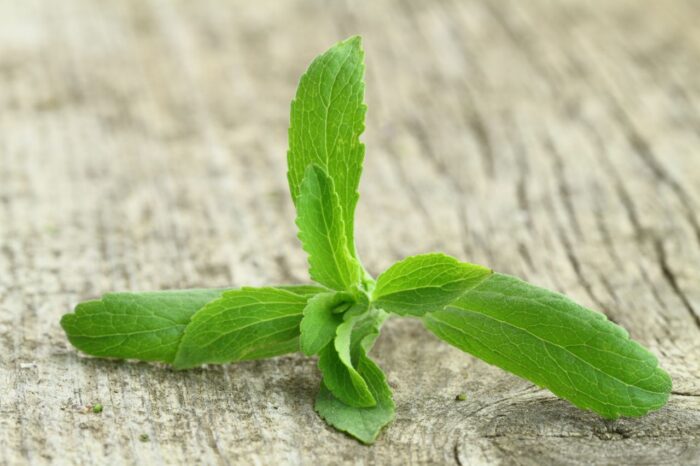
Stevia is considered a miracle sweetener, and it does sound impressive when you start reading about it. It is said to be 200 times sweeter than white sugar while containing ZERO calories and ZERO carbs.
While that sounds too good to be true, it is true, and Stevia is currently one of the best daily sweeteners for those with a fatty liver.
It’s true, some people complain that it leaves a slightly metallic aftertaste, but that’s something you can deal with (and not everybody feels that – for example, I don’t get that metallic aftertaste).
The only potential problem with Stevia is that there are not a lot of studies around it. A more recent one caused a bit of controversy, but I still use it daily. You can read more in-depth about Stevia here.
The bottom line is that there is no actual, factual proof (that I know of) suggesting that Stevia might be unhealthy.
Keep in mind that since Stevia is so incredibly sweet, you need to adapt all quantities when using it. But if that’s our only problem – it’s a great one to have!
When purchasing Stevia, make sure you get the pure powder – most you can buy online are mixed with various other artificial sweeteners (like Erythritol, which might be a poor choice due to added health risks).
Below is my go-to Stevia brand you can get from Amazon, followed by an alternative:
- Pure Stevia Powder (affiliate link) IMPORTANT: 1 spoon of this Stevia powder = 1 spoon of sugar!
- Now Stevia Powder (affiliate link) IMPORTANT: 1 tsp = 1/2 cup sugar!
Solid alternatives: Monk Fruit and Allulose
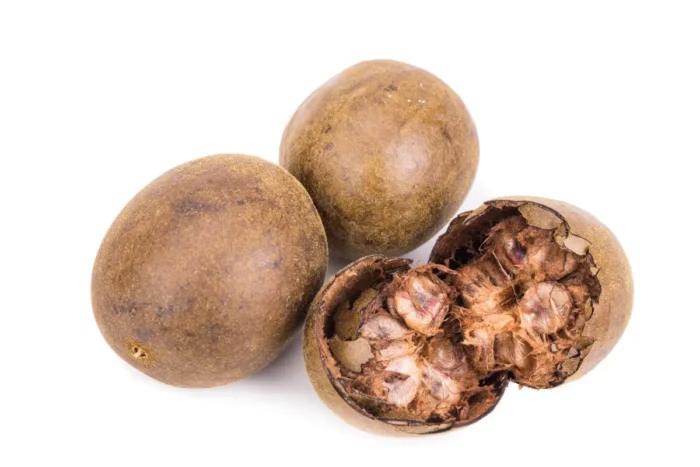
If Stevia does not work for your taste buds, you have two other great options: Monk Fruit and Allulose.
Monk fruit is another natural, zero-calorie sweetener that tends to have a cleaner taste than Stevia.
Allulose is a rare sugar that your body does not metabolize, meaning it passes through without spiking your blood sugar or loading your liver with fat.
I have to admit that I only recently started using these two sugar alternatives, and I am very pleased with them. This comes after years of consuming honey or erythritol as the main substitutes, and both are no longer considered good options. This proves how important it is to never stop learning!
It’s similar to using painkillers for fatty liver: when I was diagnosed more than 10 years ago, doctors said that ibuprofen (like Advil) is better than Tylenol, but nowadays the consensus is different.
Back to these two sugar alternatives, I recommend you check them out right away if you haven’t done so already. They are going to become your favorites for sure:
Fatty liver sugar alternative: Honey
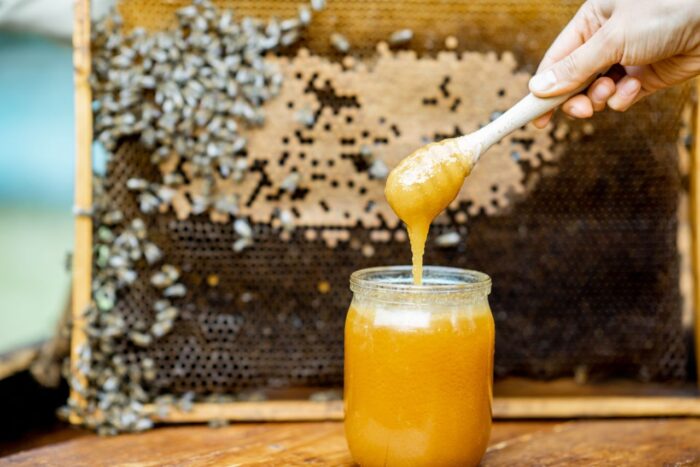
This used to be my #1 recommendation, but things have changed. That is because even though it has trace minerals that white sugar lacks, it still packs a huge punch in terms of carbohydrates.
More importantly, honey is roughly 40 percent fructose, which, for MASLD, is the absolute worst type of sugar you can consume. Your body processes fructose almost exclusively in the liver, where it directly drives the creation of new fat cells.
For example, 100 grams of sugar have 100 grams of carbs, while 100 grams of honey “only” have 82 grams of carbs. That’s still a lot!
However, raw numbers are not everything that matters here. The sugar in honey is absorbed more slowly than white sugar, so it doesn’t have the same impact on the Glicemic Index, while also helping us feel full for a bit longer.
However, it still should be considered more of a treat than a daily replacement for sugar. Keep moderation in mind when consuming it, and use as little as possible.
To keep things as safe as possible, use raw honey or organic honey, or at least try to get it from trustworthy sources. It appears that much of the honey in stores is actually fake and made with sugar, and that’s exactly what you don’t need.
If you are looking for some recommendations, here are a couple:
- My all-time favorite, Nature Nate’s honey (affiliate link), which is raw and unfiltered honey that comes in an easy to use package.
- Or YS Organic Bee Farms (affiliate link) – which is also raw, unfiltered and unpasteurized.
Fatty liver sugar alternative: Maple Syrup
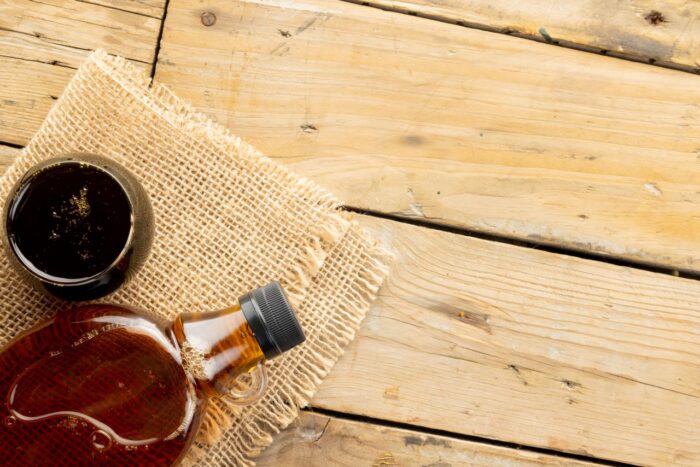
In my opinion, maple syrup is a bit better than Honey because it has even fewer sugars/carbs than sugar and even honey. Generally, 100 grams of maple syrup have 67 grams of carbs, while the same amount of white sugar has 100.
But just like honey, you still need to limit your usage to a minimum and consume it as a treat. Maple syrup contains sucrose, which breaks down into glucose and fructose in your body.
The only problem here is that it’s usually more expensive than honey and not everybody loves the taste. But if you don’t, you already have solid alternatives.
Look for dark-colored and strong-tasting varieties to get the most flavor out of a very small drop.
If you need some recommendations or opinions on which are the best ones to get, I would always go for organic Canadian-made Maple Syrup, just to keep it as healthy as possible for our liver (Amazon links below):
- Coombs Family Farms (affiliate link) is my top choice, closely followed by:
- Hidden Springs Organic Maple Syrup (affiliate link).
Other sweeteners you could use
Apart from the natural sweeteners above, there are sugar alcohols like maltitol, sorbitol, and xylitol. These, despite the name, don’t have any actual alcohol in them and usually come as low-calorie or no-calorie sweeteners, and they are considered generally safe.
I use them occasionally, as part of sugar-free items I buy from supermarkets, but I started to eat minimum amounts because of the recent medical studies that have linked Erythritol to increased blood clotting and higher cardiovascular risks.
Since having MASLD already puts us at a higher risk for heart issues, I think there’s no need to increase it, especially since we already have better alternatives anyway.
Conclusion
Sugar is bad when you suffer from a fatty liver. You should eat as little of it as possible, no matter if we are talking about white sugar, honey, or maple syrup. Our bodies turn excess carbohydrates into fat in the liver – and that’s exactly what we don’t need.
I personally believe the best choice is to keep Stevia or Monk Fruit around for your daily coffee and baking. They are the clear winners since they have zero carbs and zero fructose.
Then, keep some maple syrup or honey in the pantry for those rare moments when you need a specific flavor, or you truly crave something different. Just remember to measure them carefully and only have them as a treat.
And if you’re still looking for that perfect diet, make sure to check out my recommended one, the one that helped me reverse my fatty liver!


I was diagnosed with fatty liver in 2014 and successfully reversed it by mid-2015 using a natural diet and lifestyle changes. Since then, I’ve dedicated over a decade to researching this condition and helping others navigate their own recovery. I am the author of ‘From Fatty Liver to Healthy Liver’ and the founder of this community. My goal is to translate complex medical studies into practical, real-world advice that actually works, combined with my personal experience on the matter.