
Note: This article is based on my personal experience and research. I am not a doctor or a dietitian, and this content is for informational purposes only. Always consult with your healthcare provider before making any changes to your diet or lifestyle.
Eating pork after being diagnosed with a fatty liver seems out of the question. Pork is, after all, everything we shouldn’t eat: red meat, high in saturated fat. Fortunately, the reality is a bit different.
So if you are wondering whether you can eat pork with NAFLD (now officially known as MASLD, or Metabolic dysfunction-associated steatotic liver disease), the answer is a cautious yes. You can eat pork but you have to be picky about the cut, the portion, and the preparation.
Here is the short version for those in a hurry:
- Best Cut: Pork tenderloin (around 4% fat).
- Cuts to… cut off the menu: Bacon, ribs, and pork belly.
- Portion Size: 100 grams, limited to once per week or every two weeks.
Let’s break it down below!
Why Pork Can Be a Problem for Your Fatty Liver
Pork, especially the processed fatty kind, isn’t doing your liver any favors. It’s high in saturated fats and Omega-6 fatty acids, which contribute to inflammation and fat buildup in your liver.
But before you throw your pork chops in the trash, let me give you some hope. Not all pork is created equal. Some cuts, like tenderloin, are lean and packed with nutrients. If you’re smart about it, you can enjoy pork occasionally without harming your liver.
By the way, managing a fatty liver goes beyond just food. I highly recommend checking out my guide on what painkiller you can take with fatty liver disease for a complete picture of safely managing your health.
What Type of Pork Can You Eat with a Fatty Liver?
Bacon lovers, brace yourselves: I’ve got bad news! High-fat cuts like bacon, ribs, and pork belly are off the menu. These are basically saturated fat bombs that your liver does not need and cannot process efficiently.
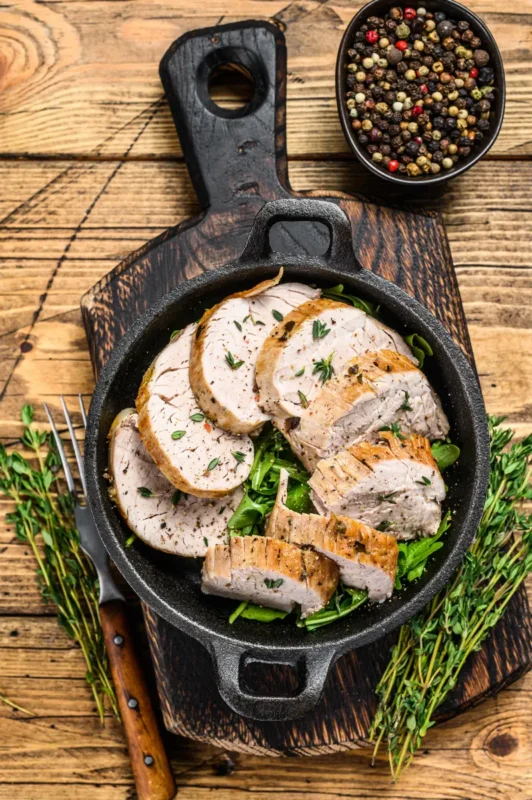
Instead, switch to pork tenderloin (also known as pork fillet). This lean cut has about 4% fat and only a small fraction of that is the bad, saturated kind. In fact, it’s so lean that it’s comparable to chicken breast.
Plus, it’s a solid source of protein, vitamin B6, potassium, and iron and has zero carbs (or sugars) – which is again a great thing!
And here is a tip I learned over the years: meat quality matters. If your budget allows, opt for pasture-raised pork over conventional options. Pasture-raised pigs tend to have a slightly better lipid profile and fewer inflammatory compounds, making this type of meat a much safer bet for a healing liver.
Pro Tips for Eating Pork Tenderloin:
- Stick to small portions (100 grams per meal). This has around a quarter of the daily recommended amount of cholesterol, so you can easily overdo it if you eat too much.
- Cook it smart: grill, roast, or boil it – no frying, no added fats.
- Pair it with loads of veggies: but not just potatoes (although you can have a few since potatoes can be OK for fatty liver).
I’ve been eating pork tenderloin occasionally after being diagnosed with MASLD/NAFLD and I still managed to reverse it. I followed my rules above and all went well. But there are better meats out there.
For example, if you need some protein, go for chicken instead or fish, including fatty fish like salmon. After all, fatty liver disease is serious and you should treat it accordingly.
But if you must have pork, limit it to once a week – or even better, once every couple of weeks and pair it with a solid side of healthy vegetables.
I need your help to keep this website alive! Consider becoming a Patron to help me achieve that. Thank you!
How to cook your pork if you have NAFLD?
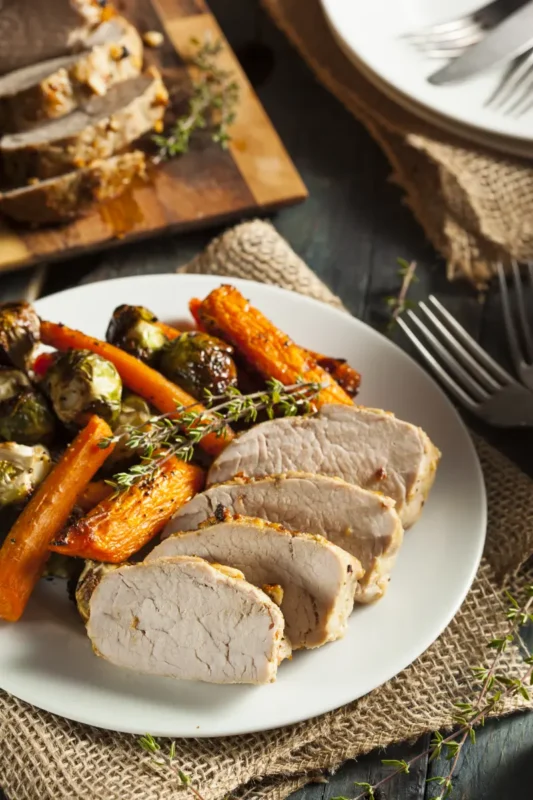
Even the leanest pork (or any type of food) won’t do you any good if it’s swimming in butter or oil. The way you cook matters just as much as the cut itself. Here are your three options when it comes to keeping pork liver friendly:
- Boil it: I know, it’s not the tastiest meat, but it works if you’re making a stew or soup.
- Grill it: Toss it on the grill, season it with some herbs, and call it a day. Do NOT add extra fats/sugary dressings.
- Roast it: Use a rack to let any extra fat drip off for even better results.
- Air fry it: I started using my air fryer regularly because it gives you that satisfying roasted texture without added oil and it’s sometimes easier to make than turning on the oven for roasting.
And here’s a bonus tip: trim off any visible fat before cooking. Every little bit helps in keeping those fat numbers low and yourself motivated to lose weight.
More Porky Business
You might be wondering if pork is healthier than beef when it comes to battling fatty liver disease.
That is not necessarily the case. Both meats can be high in saturated fat and cholesterol, depending on the cut. Lean cuts of pork tenderloin may be slightly better than fatty beef cuts like ribeye – or even cheese – but chicken and fish are still the preferred options.
Also, if you want that meaty texture, or some extra protein in your diet, there are some solid pork alternatives out there.
Plant-based alternatives like seitan or tofu marinated with similar spices can taste very similar to pork. Just make sure to read the list of ingredients to make sure they’re healthy (many vegan/vegetarian options are not, unfortunately, because of the plethora of additives).
Enjoying this content? Support the site on Patreon to help fuel future guides and resources! Thank you!
Final words
Having a fatty liver doesn’t mean you have to swear off pork forever, but it does mean making smarter choices. And that is sticking to eating pork tenderloin only, cooking it in a healthy way and only having small portions in moderation.
Combine it with plenty of vegetables or replace it with even leaner meats or even legumes (peas, beans, lentils, chickpeas, and so on).
If you’re having trouble finding varied things to eat, make sure to check out my previous article sharing some MASLD-friendly recipes.

I was diagnosed with fatty liver in 2014 and successfully reversed it by mid-2015 using a natural diet and lifestyle changes. Since then, I’ve dedicated over a decade to researching this condition and helping others navigate their own recovery. I am the author of ‘From Fatty Liver to Healthy Liver’ and the founder of this community. My goal is to translate complex medical studies into practical, real-world advice that actually works, combined with my personal experience on the matter.
Thank you so much! This is so very useful.
Is there any replacement for butter and what about almond butter
Almond butter is a good replacement – although high in fat (around 60%), most of it is unsaturated fat, unlike butter.
For spreading over a slice of bread, for example, I usually replace butter with a thin layer of low-fat yogurt with no added sugar.