

Note: This article is based on my personal experience and research. I am not a doctor or a dietitian, and this content is for informational purposes only. Always consult with your healthcare provider before making any changes to your diet or lifestyle.
Itching isn’t the first thing people think of when they hear “fatty liver disease.” Fatigue, digestive issues – sure. But itching? That’s one of the rarer symptoms of NAFLD, but a symptom nevertheless.
While itching can be linked to fatty liver (as well as plenty of other conditions), it doesn’t necessarily mean that something more serious is happening in your body.
Even better, there are ways to manage it while working on reversing your condition and in today’s guide, I’ll share everything you should know about it, from doctors’ advice to natural ways that have helped others deals with this annoying problem.
If you have just been diagnosed, I wrote an in-depth article about what to do first.
Itchy Skin Alone Doesn’t (Necessarily) Mean “Fatty Liver”!
Let’s get one thing straight first: Itching (pruritus) isn’t one of the most common symptoms of NAFLD/MASLD, but some people do experience it. In the Facebook support group that I have managed for over a decade now, many people report itching or even rashes, for example.
That said, itchy skin on its own is not enough to diagnose fatty liver. Most of the time, itching is caused by something else entirely, like allergies, eczema, or just dry skin.
If you already know you have fatty liver and you’re also experiencing itching, then yes, it could be connected (although even then, it could be something else causing it – see this article for more info).
But if itchy skin is your only symptom, don’t jump to conclusions! See a doctor and get checked – that’s the only way to know what’s really going on.
Also, if you experience this symptom, it doesn’t automatically mean that your condition has advanced or worsened. While it is true that itching is far more common in advanced liver diseases, even people with the mildest form of fatty liver have reported it (you can learn more about the fatty liver stages here).
What causes itching with fatty liver?
The real causes of pruritus when associated with liver disease are not fully known – various studies on the matter have been conducted, without any clear results or findings. However, the most common reasons for this are (source here):
- Increased bile salts in the blood
- Histamine fluctuations
- Hormonal factors (progesterone differences)
- Lysophosphatidic acid (LPA) and endogenous opioids (these are complex chemical messengers in the body)
In plain English, my doctor said that these basically mean that “toxins that are expelled by our body through the skin make it itch.” And this can be associated with a fatty liver disease.
When Should You Be Concerned?
Most itching is harmless, but there are situations where it’s worth seeing a doctor sooner rather than later. Red flags include:
- Itching that gets worse at night
- Yellowing of the eyes or skin (jaundice)
- Very dark urine or pale stools
- Severe fatigue or abdominal pain
- Itching that doesn’t improve with simple skincare
If you have any of these symptoms along with itching, don’t wait! Get medical advice as soon as possible.
Fatty Liver-Related Itching Relief: What to Do?
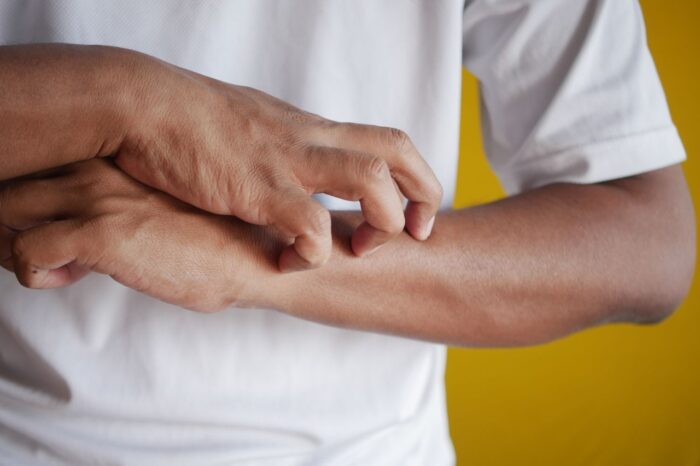
The best way to get rid of this NAFLD-related pruritus is to reverse your fatty liver by following a proper diet for it. Healing your fatty liver doesn’t happen overnight, though.
Based on my experience, I can say that symptoms improve as soon as one to two weeks after you start making the required lifestyle changes to cure your liver. But that’s still a lot of time to wait, so you can try a few methods to help you scratch that itch without actually doing it.
Topical Relief Options
- Moisturizing creams or lotions – Choose hypoallergenic, fragrance-free ones. Dry skin makes itching worse, so even if they don’t directly address itching induced by a fatty liver, they can make it more bearable.
- Calamine or menthol lotions – These provide a cooling effect that eases irritation.
- Oatmeal-based creams – Known to calm sensitive skin.
- Warm, damp compress – Applying a wet cloth to the itchy area can soothe discomfort.
(Note: Always check with your doctor before using medicated creams or ointments.)
Lifestyle Adjustments
- Don’t scratch – Easier said than done, I know, but scratching makes things worse and risks infection.
- Short, lukewarm showers – Avoid long, hot baths that dry the skin further. Use hypoallergenic soaps (I only use baby soap, for example) that help hydrate your skin.
- Loose clothing – Let your skin breathe instead of trapping heat and sweat.
- Stress management – Anxiety and stress can intensify itching. Simple relaxation techniques, better sleep, or even light stretching can help not just with itching, but with managing fatty liver disease as a whole – read my story about stress and fatty liver here.
Combine these with eating a clean diet and exercising, and you will get past the problems, as long as they are related to a fatty liver. The sooner you start dieting, the sooner you will get rid of all the symptoms, including itching, but also that annoying pain in the upper right side of your body.
Final words
Itching with fatty liver can be frustrating, but it’s not usually dangerous. The best long-term solution is reversing the fatty liver itself through diet and lifestyle. In the meantime, topical creams, simple skincare, and stress reduction can help take the edge off.
If you have other methods to reduce itching associated with fatty liver disease, don’t hesitate to share them in the comments section below.


I was diagnosed with fatty liver in 2014 and successfully reversed it by mid-2015 using a natural diet and lifestyle changes. Since then, I’ve dedicated over a decade to researching this condition and helping others navigate their own recovery. I am the author of ‘From Fatty Liver to Healthy Liver’ and the founder of this community. My goal is to translate complex medical studies into practical, real-world advice that actually works, combined with my personal experience on the matter.