
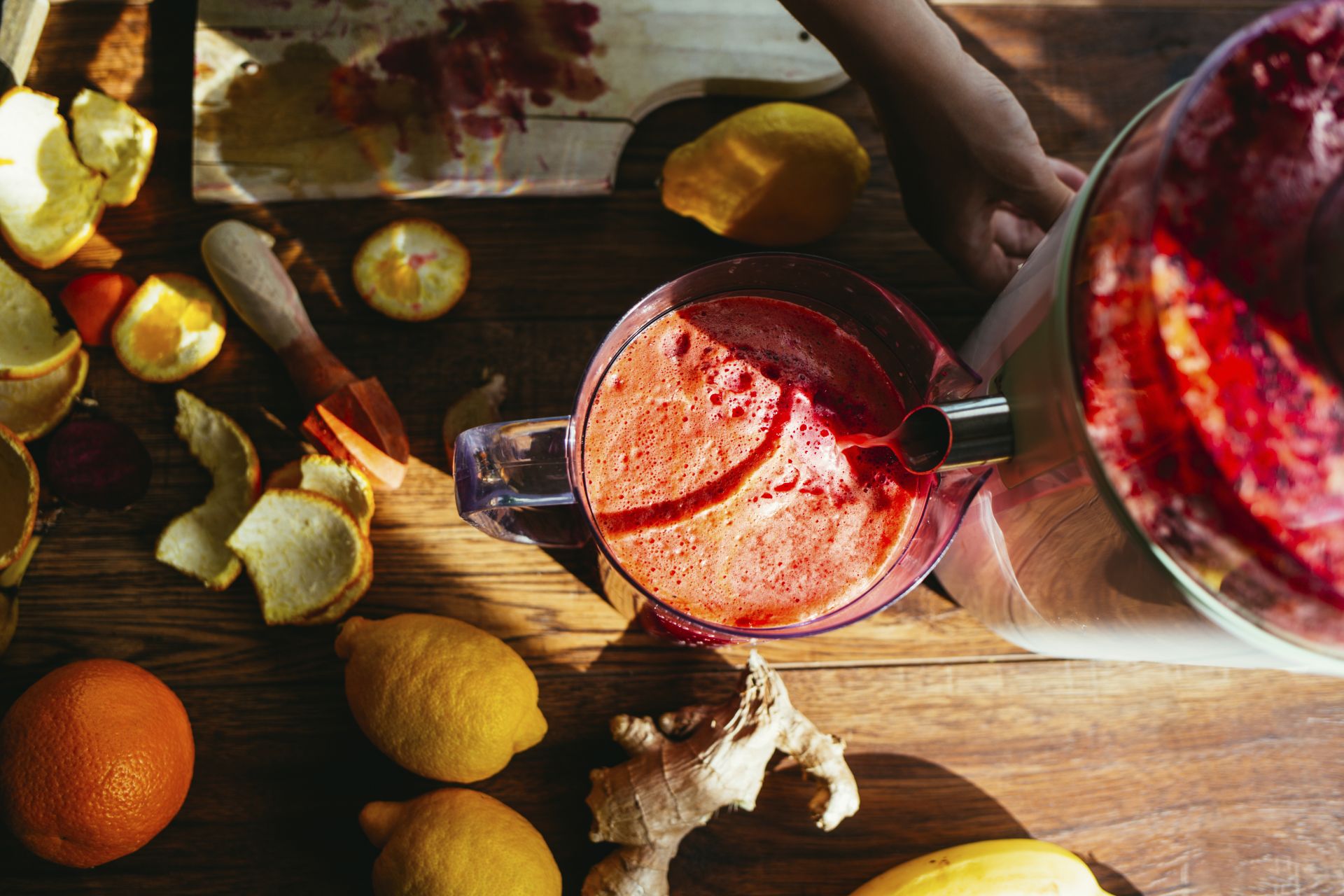
Juicing is everywhere these days. You can’t scroll through social media without seeing someone claim that an alien-green or ruby-red liquid is the secret to “detoxing” your system or cleansing your liver. It sounds appealing and easy – a quick fix in a glass (one that usually tastes delicious too) surely does!
But is it indeed what that glass of juice gives you? And most importantly, should you adopt juicing if you are dealing with fatty liver disease (aka MASLD)?
So, is juicing the miracle cure it’s marketed to be, or could it actually be making things worse? That is exactly what we are going to break down today.
So… what exactly is juicing?
Juicing is the term used for extracting the liquid from fresh fruits and vegetables, leaving the solid matter behind. Some proponents claim that vitamins and minerals from juices are better absorbed than they would be from whole fruit because the body doesn’t have to “work” to digest them.
But generally, this is not the case.
On the contrary – when you juice fruits and vegetables, you lose many of the nutrients, including some of the vitamins, minerals, and especially the fiber, which is essential in helping with digestion and acting as a buffer that slows down the absorption of sugar.
There are many “detox” diets out there, and various fruit/veggie combinations that are said to cleanse your body and remove toxins, as well as help reverse fatty liver disease faster. But unfortunately, there is no scientific proof behind this either.
Your liver is your body’s filtration system. You don’t clean a filter by pouring more sugar through it; you clean it by stopping the flow of sludge that clogs it up.
I have already touched on this subject in previous articles, like this one dedicated to soda/soft drinks, so make sure to read it as well.
The Science: Why Juicing Can Backfire
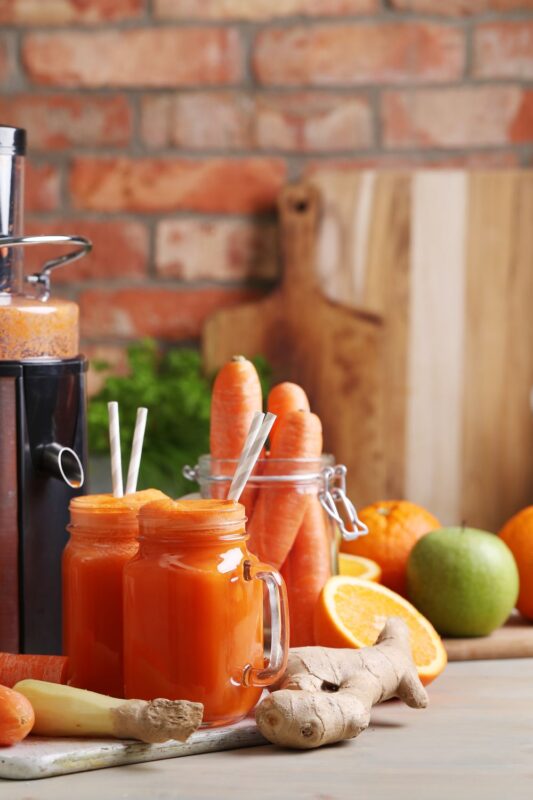
When you prepare your fruit/veggie juice, you remove the fiber and as a result, the natural sugars (fructose) hit your bloodstream and liver almost instantly.
The problem is that our liver handles fructose differently from other sugars. When it gets flooded with liquid fructose all at once, it gets overwhelmed and converts that excess energy directly into liver fat – a process called de novo lipogenesis.
Also, these juices are even more harmful because that sugar spike triggers an insulin response. So even though natural, even when prepared at home from fresh ingredients, fruit juice becomes dangerous, especially if you already have MASLD.
Is juicing good for those with a fatty liver disease?
While it is true that drinking freshly squeezed juices made from a mixture of fruits and vegetables is better than not eating them at all, juicing is not better than eating the whole fruits and vegetables instead.
The main argument for juicing is that it gives the digestive system a break.
However, only a very small amount of people actually have medical conditions that require a low-fiber diet. For most of the world – and especially for those of us trying to reverse fatty liver – fiber is essential. It feeds healthy gut bacteria, keeps us full for longer and slows down fructose absorption.
So, as I already said in a previous article detailing the types of fruits you should eat if you have a fatty liver, go for the whole fruit instead of the juice, no matter what ingredients you use.
After all, you won’t usually eat more than an apple or orange at once, but when juicing, you will usually need more fruits.
If you really can’t do it any other way (like preparing a smoothie, as I recommend below), here are the best juices for fatty liver.
Important Warning: If you have insulin resistance, pre-diabetes, or Type 2 Diabetes alongside your fatty liver, I strongly suggest you skip this section and move to the smoothies. Liquid sugar – even from beets – can spike your blood glucose.
Try to keep the veggie ingredient predominant, and don’t overdo it, because these juices, even though homemade and fresh, still pack a high carb count (and fast-absorbing fructose too, which is the worst):
1. Beet, carrot, lime & ginger juice: Beets are high in antioxidants and contain betaine, a compound that can help reduce liver fat. Beet juice has been shown to improve liver function and reduce inflammation in animal studies.
Carrots are rich in beta-carotene, which can help reduce liver inflammation. Ginger is also known for its anti-inflammatory properties. Lemons are rich in vitamin C, which is an antioxidant that can help protect the liver from damage.
Optional: To make it sweeter and get more liquid, consider adding half a cup watermelon. It has vitamins and minerals, but also lycopene (found in tomatoes too) which might help reduce inflammation.
2. Pineapple juice with carrots, cranberries and turmeric: Pineapples are rich in bromelain, an enzyme that can help reduce inflammation in the body (read more about pineapple and fatty liver disease here).
Cranberries are rich in antioxidants called proanthocyanidins, which can help reduce liver inflammation and improve liver function. Turmeric contains a compound called curcumin, which has anti-inflammatory and antioxidant properties. I’ve already talked about carrots above.
This is the best alternative to juicing for fatty liver
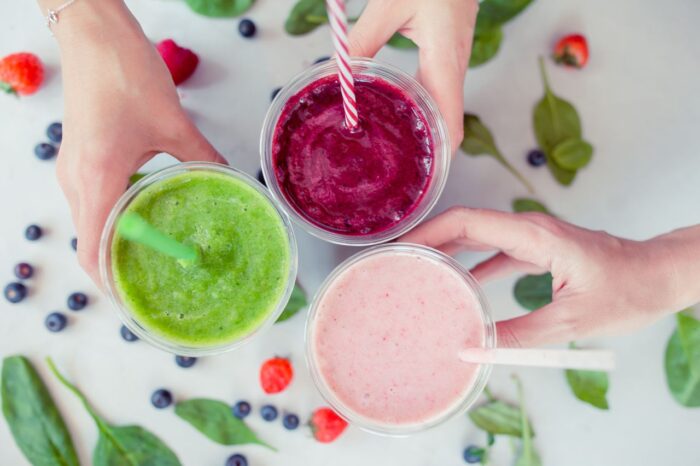
The only thing that’s as good as eating the whole fruit and/or vegetable is preparing smoothies.
As opposed to juices, smoothies retain all the fiber and keep all the nutrients in the base ingredients intact. They also taste great and can help you consume healthy foods that you wouldn’t normally have as standalone ingredients. Plus, they act more as a meal than juices do, by keeping you full for longer.
Here is another reason smoothies beat juices: Nutrient Absorption. Many vitamins essential for the liver (like Vitamin A, K, and E found in leafy greens and carrots) are fat-soluble. This means your body cannot absorb them properly unless they are consumed with fat.
With a juice, you lose that opportunity. With a smoothie, you can blend in healthy fats like avocado, nuts, or seeds to ensure you actually get the benefits of the vitamins you are drinking.
So if you do want to try some sort of a liquid form for fruits and vegetables, go for smoothies and skip juices.
Also, try to prepare them using 70-80% vegetables and just 30-20% fruits, respectively.
You can mix and match ingredients as you like, trying to incorporate as many of the superfoods for the liver (and other healthy choices) as possible.
Only prepare as much as you can consume for one meal/snack and don’t add any sugar, honey, or other artificial ingredients for enhancing the taste. Instead, use just fruits and vegetables (as well as water, if you need to).
Also read: Monthly Shopping List for Fatty Liver Disease
Liver-friendly smoothie recipes to try
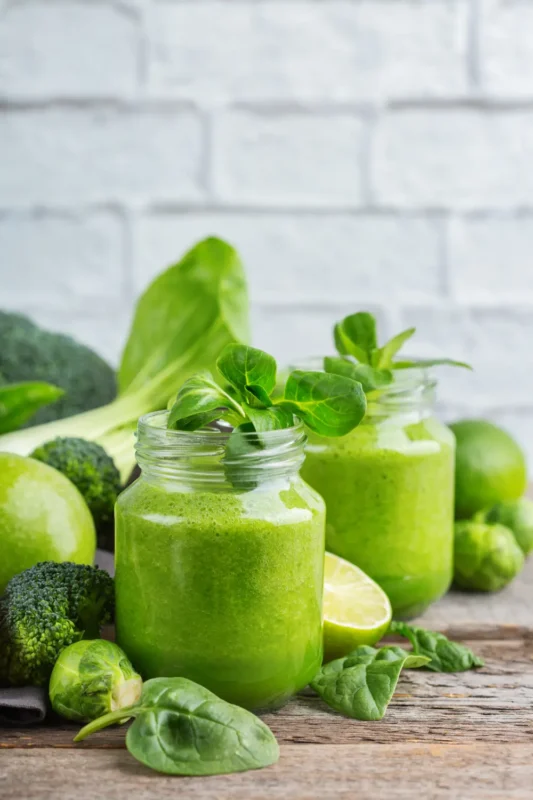
While I am not a big fan of smoothies because I don’t really like the texture and I prefer eating the whole vegetable or fruit instead, here are two recipes for good, liver-friendly smoothies you can prepare to give yourself a boost and a delicious snack or breakfast.
1. Green smoothie ingredients
- 1 green apple, cored and chopped
- 1 cucumber, chopped
- 2 celery stalks, chopped
- 1 handful of kale
- 1 handful of spinach
- Half a lemon (peeled and deseeded)
- Half a cup parsley (chopped)
- 1 tablespoon Chia seeds or Flax seeds
- 1/2 cup water (or less/more, as needed)
2. Beetroot & Carrot smoothie ingredients
- 1 medium beetroot, peeled and chopped
- 1 medium carrots, peeled and chopped
- 1 green apple, cored and chopped
- 1 lemon (peeled and deseeded)
- 1-inch piece of ginger, grated
- 3 Walnuts halves (for Omega-3s and fat absorption)
- 1/2 cup water
Note on Texture: Since I mentioned I dislike the texture, know that raw beets and carrots can be gritty in a smoothie unless you have a high-powered blender. A good trick is to grate them finely before blending, or lightly steam them and let them cool before using. This makes the texture much smoother.
Incorporating These into a Healthy Lifestyle
While juicing can be a great way to incorporate healthy fruits and vegetables into your diet, it’s important to remember that juicing should not be used as a replacement for whole fruits and vegetables.
Juicing will remove most of the fiber content of fruits and vegetables, as well as other nutrients. Therefore, it’s essential to consume whole fruits and vegetables in addition to juicing or, even better, INSTEAD of juicing (or at least prepare some smoothies).
If you want a drink, the smoothie is the superior choice because it keeps the fiber matrix intact and allows for the addition of healthy fats.
All in all, juicing is not as amazing as some people out there try to make it seem to be. Go for scientifically proven ways for reversing fatty liver (like following the Mediterranean diet I followed), lose weight without starving yourself and stick to these lifestyle changes long term.
References and studies: Mayo Clinic, The American Journal of Medicine, Healthline & this study.

I was diagnosed with fatty liver in 2014 and successfully reversed it by mid-2015 using a natural diet and lifestyle changes. Since then, I’ve dedicated over a decade to researching this condition and helping others navigate their own recovery. I am the author of ‘From Fatty Liver to Healthy Liver’ and the founder of this community. My goal is to translate complex medical studies into practical, real-world advice that actually works, combined with my personal experience on the matter.